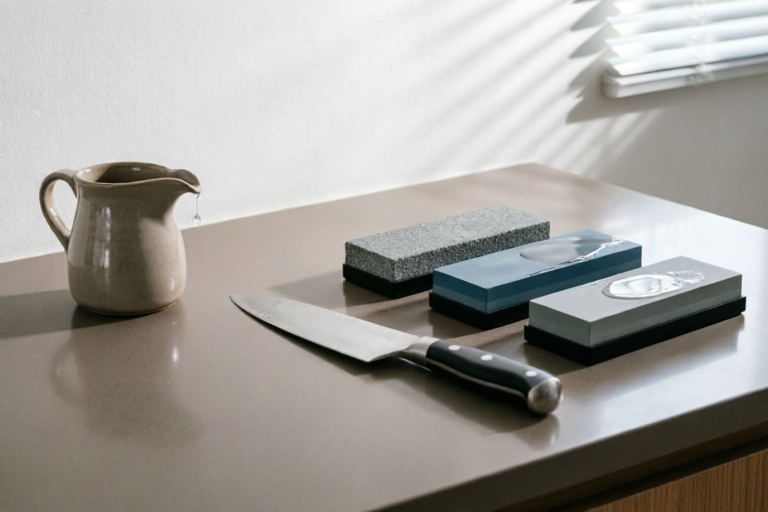
Step-by-Step Guide to Sharpening Kitchen Knives at Home
Achieve Professional Results at Home with These Knife Sharpening Tips
1. Introduction to Knife Sharpening
Importance of maintaining sharp knives in the kitchen: A well-sharpened knife not only makes cooking easier but also safer. Dull knives can slip more easily, leading to accidents. Additionally, sharper knives require less force, reducing strain on your hands and wrists.
Common mistakes people make when sharpening knives: One common mistake is over-sharpening, which can wear down the blade too quickly. Another is not using the correct angle, which can lead to uneven edges. Lastly, neglecting to properly clean and prepare your knives before sharpening can result in clogged stones and ineffective sharpening.
Overview of the tools needed for effective knife sharpening: For home use, you'll need waterstones, whetstones, or sharpening rods. Each tool has its advantages, so it's important to choose one that suits your needs and experience level.
2. Understanding Different Types of Knife Edges
Explanation of single-bevel vs double-bevel edges: Single-bevel knives are typically used in Asian cuisine and have an edge that slopes from the spine to one side. Double-bevel knives, commonly found in Western kitchens, have an edge that slopes from the spine to both sides.
How edge geometry affects cutting performance: The angle of the bevel determines the knife's sharpness and durability. A smaller angle results in a sharper but more fragile edge, while a larger angle provides a tougher edge that lasts longer.
Tips on identifying your knife's edge type: Look for asymmetry in the blade near the tip. If the edge slopes from the spine to one side, it's a single-bevel knife. If it slopes to both sides, it's a double-bevel knife.
3. Preparing Your Workspace and Tools
Setting up a safe and comfortable sharpening area: Choose a flat, stable surface away from any hazards. Ensure good lighting and ventilation. Keep all necessary tools within reach but out of the way.
Essential tools for home knife sharpening (waterstones, whetstones, sharpening rods): Waterstones and whetstones are great for fine-tuning edges, while sharpening rods are ideal for maintaining sharpness between sharpenings. Make sure to select the appropriate grit for your needs.
Cleaning and preparing your knives before sharpening: Clean your knives thoroughly to remove any food residue or oils. Dry them completely to prevent rust. Inspect the blade for any nicks or chips that may require special attention during sharpening.
4. The Step-by-Step Sharpening Process
Detailed instructions for using waterstones or whetstones: Start by soaking your waterstone in water for about 10 minutes. Place the stone on a damp towel to stabilize it. Hold the knife at the correct angle (usually around 15-20 degrees) and move it back and forth across the stone, applying even pressure. Repeat on the other side of the blade. Finish with a few passes on a finer grit stone for a polished edge.
Techniques for honing with a sharpening rod: Use a steel rod to hone your knife regularly between sharpenings. Hold the rod vertically and place the heel of the knife against the rod. Pull the knife towards you while keeping the blade at the correct angle. Repeat on the other side of the blade.
Frequency of sharpening based on usage: The frequency of sharpening depends on how often you use your knives and the type of cutting tasks they perform. Generally, you should sharpen your knives every 1-3 months, or whenever you notice them becoming dull.
5. Maintaining Sharpness Between Sharpenings
Proper storage techniques for knives: Store your knives in a block or sheath to protect the edge from damage. Avoid stacking knives on top of each other, as this can cause dulling. Consider using magnetic strips for easy access and protection.
Regular honing with a steel rod: Honing helps maintain the edge between sharpenings. It removes small burrs and realigns the edge. Aim to hone your knives after every few uses.
Best practices for handling knives to extend their lifespan: Always cut on a cutting board, not directly on countertops. Avoid using knives for tasks they're not designed for, such as opening cans or prying lids off jars. Clean knives promptly after use and dry them thoroughly to prevent rust.
6. Conclusion: Achieving Professional Results at Home
Recap of key points covered in the guide: We've discussed the importance of maintaining sharp knives, common mistakes to avoid, the tools needed for sharpening, different types of knife edges, how to set up your workspace, the step-by-step sharpening process, and tips for maintaining sharpness between sharpenings.
Encouragement to practice and refine your sharpening skills: Like any skill, knife sharpening improves with practice. Don't be discouraged if your first attempts aren't perfect. With time and patience, you'll achieve professional results at home.
Additional resources for further learning: There are many online tutorials, videos, and books available to help you improve your knife sharpening skills. Join knife enthusiast forums to connect with others who share your passion for maintaining sharp tools.
Comments

The frequency of sharpening is super useful. Now I know exactly when to touch up my blades.

I've been using this method for years and it really extends the life of my knives. Thanks for sharing!

I tried the honing rod first but noticed no difference. Should I go straight to the waterstones?

Great guide! Just wanted to suggest adding a section on electric sharpeners for those who prefer a quicker option.

Super helpful! I didn't know honing was so important. My knives feel brand new after just a few minutes with the steel rod.

Worked for me! But I think I overdid it with the waterstones. Any tips on how to avoid that next time?
I'm confused about the difference between single-bevel and double-bevel edges. Can someone explain this part more simply?

Wow, finally got my knives as sharp as the day I bought them! Followed the waterstone method step by step. Totally worth it.