Travel & Lifestyle
How to Pack Lightly for a One Week Vacation Trip
Travel Smarter, Carry Less, Experience More.
"## Introduction
The excitement of planning a vacation is often dampened by the daunting task of packing. Many travelers fall into the trap of bringing far more than they need, resulting in heavy suitcases that slow you down, increase the risk of lost baggage, and incur additional airline fees. However, mastering the art of packing lightly for a one-week vacation trip transforms the travel experience. It allows for effortless mobility, reduces pre-trip anxiety, and enables you to fully immerse yourself in your destination without the burden of luggage.
This guide provides a strategic approach to minimalist travel. By analyzing your destination, curating a versatile capsule wardrobe, selecting essential tools, and utilizing professional packing techniques, you can fit everything you need for seven days into a carry-on bag. Whether you are traveling for leisure, work, or adventure, these principles will help you streamline your journey.
## Analyze Destination and Activity Requirements
Before purchasing a new garment or opening a suitcase, the most crucial step is understanding where you are going and what you will be doing. A generic packing list fails because it ignores context. Tailoring your gear to your specific environment ensures efficiency.
### Research Weather Forecasts and Seasonal Norms
One of the primary reasons people overpack is the fear of the unknown weather. Do not pack an umbrella and a swimsuit without checking the forecast first. Access reliable weather apps like AccuWeather or Windy to analyze daily temperature ranges and precipitation probabilities for your entire stay.
Look beyond the average temperature. Consider humidity and wind chill, which affect comfort more than thermometers do. If you are traveling to a coastal city in summer, expect heat and humidity; breathable fabrics like linen or moisture-wicking synthetics will be your saviors. Conversely, a mountain retreat may require thermal layers even in summer evenings. Knowing the climate allows you to pack only what is strictly necessary rather than covering every potential weather scenario.
### Evaluate Daily Plans and Cultural Context
Your activity schedule dictates your clothing needs. Are you spending eight hours a day hiking, or attending business meetings in the city?
If your itinerary involves active outdoor pursuits, prioritize performance gear—athletic shorts, durable sneakers, and moisture-wicking shirts. If you are visiting religious sites, such as temples or cathedrals, you may need to cover your shoulders and knees. Researching local dress codes can save you from buying expensive clothes once you arrive or having to wear uncomfortable outfits you didn’t pack.
Furthermore, consider the nightlife culture. Some cities require smart casual attire for dining out, while others are entirely casual. Align your “dinner looks” with reality to avoid carrying formal wear you will never touch. Finally, investigate laundry availability. Does your hotel offer wash facilities? Will you find laundromats along the way? Knowing you can wash clothes means you can pack half the usual number of outfits.
## Curate a Flexible Capsule Wardrobe
A capsule wardrobe is the cornerstone of light packing. Instead of focusing on quantity, focus on versatility. The goal is to select items that mix and match seamlessly, creating multiple outfits from fewer pieces. For a one-week trip, the ideal ratio is roughly 7 days divided into fewer clothing sets.
### Select Versatile, Layerable Clothing Items
The key to a successful capsule wardrobe lies in layering. Start with neutral base colors like black, navy, grey, or white. These shades coordinate easily with each other and hide minor stains better than bright prints. Think of your clothing system in three tiers:
1. **Base Layers:** T-shirts and tank tops made of quick-drying material.
2. **Mid-Layers:** Lightweight sweaters, cardigans, or button-down shirts that add warmth and polish.
3. **Outer Layers:** Jackets or coats that provide protection from elements.
For bottoms, limit yourself to two pairs of pants and one pair of shorts (if warm weather). Choose jeans or chinos that transition well from day hikes to evening dinners. Avoid jeans with holes or distressing unless that fits your style perfectly. Remember, you can rewear jeans multiple times without washing if you haven’t gotten physically dirty.
### Prioritize Fabric Selection
Not all fabrics are created equal when packing. Heavy denim takes up space and dries slowly. Instead, opt for travel-specific materials like merino wool, technical blends, or lightweight cotton. Merino wool is exceptional for one-week trips because it resists odor, allowing you to wear a shirt twice before washing. Technical fabrics dry overnight, meaning you can wash socks or underwear after dinner and wear them the next morning.
Avoid cotton-heavy hoodies unless necessary for warmth, as they consume significant volume. A single high-quality puffer vest can replace a heavy winter coat and take up half the room in your suitcase. Accessories like scarves or beanies can change the aesthetic of a basic outfit without adding bulk.
### Implement the Color Palette Rule
Limit your color palette to three main tones plus neutrals. If your tops are beige, blue, and white, ensure your bottoms complement all three. Stick to monochrome combinations to make matching intuitive. This prevents the dreaded “packing anxiety” of arriving at your hotel and wondering if that green shirt matches those khaki shorts. If every top works with every bottom, you can create ten unique outfits from five tops and two bottoms. This flexibility is vital for minimizing inventory while maximizing style.
## Pack Essential Toiletries and Electronics Minimally
Once clothing is sorted, the next category to scrutinize is your kit bag. Toiletries and electronics are bulky, heavy, and subject to strict airport regulations. Reducing their footprint frees up precious weight allowance for souvenirs or extra layers.
### Choose Travel-Sized Containers for Liquids
Liquid restrictions are a major hurdle for air travelers. The TSA 3-1-1 rule generally limits containers to 3.4 ounces (100ml) fitting in a single quart-sized bag. Rather than hauling full-size bottles, invest in high-quality silicone travel bottles. You can transfer shampoo, conditioner, and moisturizer into these smaller containers.
However, a smarter strategy is to switch to solid alternatives. Solid shampoo bars, deodorant sticks, and bar soap do not count as liquids and rarely leak. They also last longer than their liquid counterparts. For skincare, stick to multitasking products like a lip balm with SPF or a moisturizer with anti-aging properties to reduce product count. Even if you aren’t flying, leaving home with small quantities makes moving between locations easier.
### Prioritize Multipurpose Gadgets
Electronics should serve at least two functions. A smartphone is the ultimate multitool: camera, map, passport holder, boarding pass, and translation device. Resist the urge to bring a standalone digital camera unless image quality is critical for your profession. A good phone app can capture memories just as effectively.
Power management is critical. Bring a universal travel adapter that works across countries if your destination is international. A high-capacity portable charger ensures you stay connected during long days of sightseeing without hunting for outlets. Limit cables; use USB-C charging for both your phone and laptop if possible, reducing cable clutter. Noise-canceling headphones are excellent for saving your sanity on planes, serving the dual purpose of blocking noise and entertainment playback.
## Utilize Efficient Packing Techniques and Tools
Knowing what to pack is only half the battle; how you pack it determines whether your clothes wrinkle and if you hit the weight limit. Professional packers rely on specific methods to maximize suitcase capacity.
### Implement Rolling Methods
The military roll or bundle wrapping technique is superior to folding for t-shirts and activewear. Rolling tight cylindrical shapes minimizes empty air pockets and saves space. It also creates less creasing than traditional flat folding. Lay the garment flat, fold the sides in, and roll tightly from the bottom hem to the neck. This turns each item into a compact cylinder that nests perfectly into corners.
For delicate items like blouses or suits, use the bundle wrap method. Place larger items in the center of your packing cube or suitcase, and wrap smaller items around them. This distributes weight evenly and protects garments from sharp folds. It also helps maintain the shape of structured pieces.
### Maximize Space with Packing Cubes
Packing cubes are arguably the most important investment for organized packing. They compartmentalize your bag, making it easy to find items without digging through chaos. Use different sizes for different categories: large cubes for pants and shirts, medium cubes for underwear and socks, and small pouches for toiletries and jewelry.
Some advanced travelers use compression cubes that allow you to suck out air, reducing volume further. While this works well for soft jackets and shirts, avoid compressing down-filled items like thick puffers, as it damages the insulation over time. Organizing by category also aids security screening if officers ask to search your bag; you can hand them the specific cube needed rather than unpacking everything.
### Strategic Placement of Heavy Items
Place heavier items, such as shoes and toiletry kits, near the wheel side of a rolling suitcase. This lowers the center of gravity and prevents the bag from tipping over when upright. Stuff socks and rolled belts inside shoes to utilize dead space. Never let empty shoes sit flat, as they add weight without function. For backpacks, place heavy gear closer to your back for better weight distribution.
## Perform a Final Review Before Departure
The final hour before heading to the airport is the best time to catch unnecessary items. With fresh eyes, you can identify redundancies. This stage requires discipline and adherence to a strict checklist.
### Conduct a Last-Minute Checklist
Create a physical or digital checklist based on your previous research. Go through it item by item. Ask yourself: “Will I definitely wear this?” and “Can I buy this cheaply at my destination?” Often, we pack the “just in case” items: rain boots for a sunny forecast, an extra tie for a casual dinner, or books we promised to read. Be ruthless. If it doesn’t earn its spot, leave it behind.
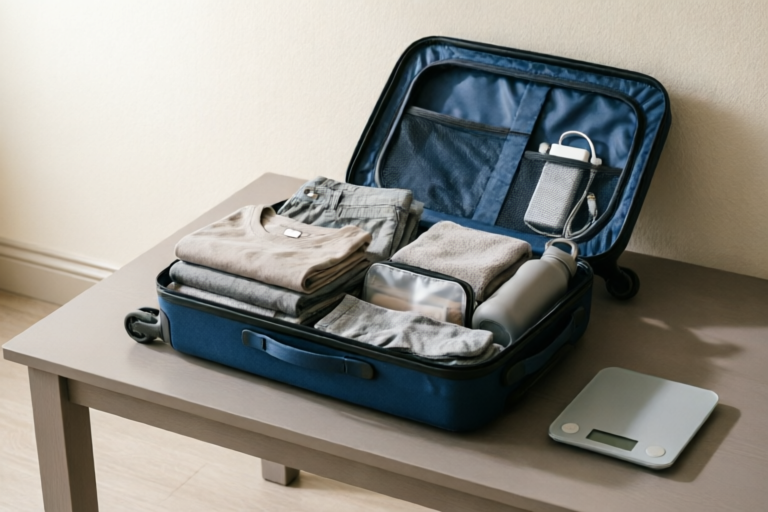
Double-check essentials that are easy to forget: passport, wallet, chargers, and medication. Verify that your bags meet airline weight limits. Most budget airlines charge heavily for exceeding the carry-on weight cap (usually 7-10 kg). Using a portable luggage scale allows you to weigh your bag at home and remove an extra jacket or book if needed.
### Digital Copies and Backup Safety
Ensure all critical documents are digitized. Scan your passport, ID, insurance cards, and flight itineraries, and store them in a secure cloud folder accessible offline. This preparation saves you from panic if the physical bag goes missing. Additionally, know your emergency contacts and the address of your accommodation.
Finally, breathe. Once your bag is zipped and checked, commit to the “trauma of forgetting” mindset. Trust that you can adapt. Buying a toothbrush in the airport pharmacy is a trivial inconvenience compared to the freedom of carrying a lightweight bag. Enjoy the relief of arriving at your hotel without wrestling with heavy luggage.
## Conclusion
Packing lightly for a one-week vacation trip is less about deprivation and more about intentional choice. By thoroughly analyzing your destination, building a flexible capsule wardrobe, minimizing your tech and beauty load, employing smart packing techniques, and performing a rigorous final review, you unlock a new level of travel freedom. Lighter bags mean more energy, lower costs, and greater agility. Ultimately, the goal of travel is to explore and connect, not to haul belongings. Embrace minimalism, trust your preparation, and let your journey begin with a smile and a light shoulder."}
Comments

JetSetJenny
I usually pack light but forget electronics charger. Any tip on keeping cables neat?
👍 25👎 0

WeekendWarrior
Super helpful! Finally can travel without dragging a wheeled monstrosity.
👍 28👎 0

Alex_Travels
Rolling shirts is good but folding jeans takes way less room for me. Might depend on fabric?
👍 6👎 0
BagLady_101
Where do you guys recommend buying travel sized stuff? CVS doesn't always stock everything.
👍 18👎 0

Mike_Goes_Going
Step 5 saved me lol. Checked the scale before leaving and was right under limit thanks to this.
👍 12👎 0

Sarah_Vacay
Does anyone else find packing cubes just end up looking like weird lumps inside the suitcase? Help.
👍 16👎 0

TravelTom_99
Tried the capsule wardrobe idea today and surprisingly only fit my whole week in a small duffel. Wow.
👍 4👎 0