Travel & Lifestyle
How to pack efficiently for a weekend getaway without forgetting anything important.
Pack Lighter, Travel Smarter, Experience More.
The excitement of a planned escape is unmatched. Whether it is a romantic city break, a spontaneous camping trip, or a reunion with friends in another town, a weekend getaway offers the perfect opportunity to recharge and reset. However, that initial rush of anticipation can quickly turn into anxiety when the moment comes to open the closet and face the mountain of clothes. Many travelers find themselves caught between overpacking, leading to heavy luggage and physical strain, and underpacking, risking discomfort or being ill-prepared for unexpected situations. The key to a seamless experience lies in finding the perfect equilibrium. By combining minimalism with thorough preparation, you can streamline your travel process, reduce stress upon arrival, and ensure you have everything needed for a memorable trip without the burden.
Efficient packing is not just about squeezing items into a suitcase; it is a strategic exercise in decision-making and foresight. When done correctly, it allows you to remain flexible and mobile, moving from the airport to your hotel or rental with ease. This guide will walk you through the entire process, from analyzing your itinerary to the final pre-departure checks. We aim to eliminate the guesswork, ensuring that you pack with confidence, knowing that nothing important has been overlooked. Let us transform packing from a chore into a calculated step toward relaxation.
## Step 1: Assess Your Itinerary and Weather Conditions
Before opening a single drawer, the foundation of efficient packing begins with research. Understanding the specifics of where you are going and what you plan to do is the most critical determinant of what goes into your bag. This phase prevents the common mistake of packing winter boots for a summer beach trip or failing to bring formal attire for a gala dinner. A thorough assessment minimizes baggage weight and ensures you are comfortable regardless of external factors.
### Analyzing Planned Activities
Your itinerary is the blueprint for your wardrobe. Start by listing every major activity scheduled for the weekend. Are you attending a business meeting, participating in a full-day hike, dining at upscale restaurants, or staying in to relax? Each activity dictates specific clothing needs. For a multi-purpose trip, opt for versatility. A pair of dark jeans can transition from a casual coffee run to a nice dinner depending on the top you pair it with. If your itinerary involves significant walking, prioritize footwear that is broken in and supportive. If adventure sports are involved, consider moisture-wicking fabrics that dry quickly rather than heavy cotton that retains sweat.
Creating a visual schedule can also help. Draw a timeline of your days and note the setting for each hour. This helps identify patterns, such as alternating between casual and semi-formal settings. By mapping out your day, you can eliminate redundant items. For instance, if you know you will be indoors for two evenings, you do not need multiple jackets that are suitable only for the outdoors. Knowing your schedule empowers you to curate a capsule wardrobe tailored specifically to your actions, reducing clutter before you even leave the house.
### Decoding the Weather Forecast
Even the best-laid plans are subject to nature, and weather plays a pivotal role in packing decisions. Do not rely on historical averages; check the current forecast for the destination a few days before departure and again the morning you leave. Look for rain chances, temperature drops, or wind conditions that might affect your comfort. If rain is predicted, waterproof layers are non-negotiable. If temperatures fluctuate wildly between day and night, layering becomes your best friend.
Investigate the climate specifics beyond just temperature. Is the destination humid? You might want breathable linen instead of synthetic blends. Is it windy? Avoid loose scarves or hats that could become projectiles. Furthermore, consider the weather at your point of transit. Airports and airplanes can be notoriously cold, so having a cardigan or hoodie that works with your checked or carry-on outfit is essential. By understanding the meteorological landscape, you select garments that keep you comfortable throughout the journey, preventing the need to purchase emergency essentials once you arrive.
## Step 2: Mastering Smart Packing Techniques
Once your items are selected based on your research, the next challenge is fitting them efficiently into limited space. Smart packing techniques focus on maximizing square footage within your luggage while minimizing wrinkles and damage. These strategies allow you to pack more comfortably and potentially upgrade your luggage size or switch to a carry-on, saving time at the airport. Implementing these methods turns the chaotic task of stuffing a bag into a satisfying puzzle.
### The Art of Rolling vs. Folding
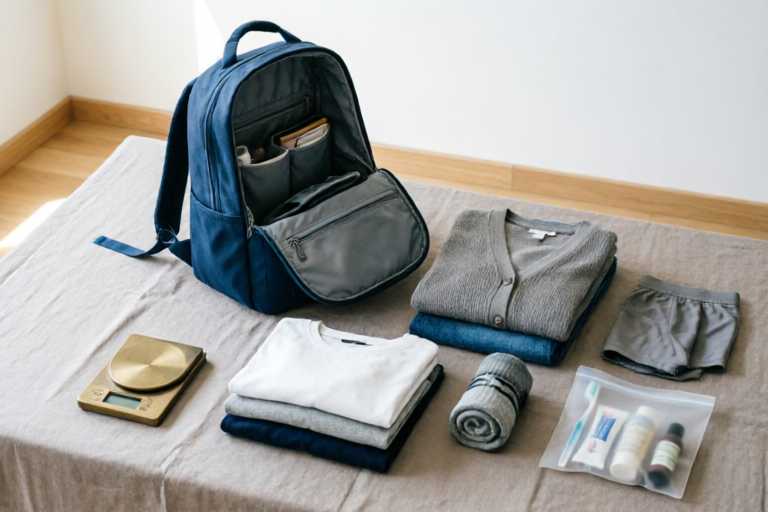
There has long been a debate among travelers regarding whether to roll or fold clothes. While both methods have their merits, the technique you choose depends on the fabric and the type of item. Rolling clothes is generally superior for t-shirts, sweaters, pajamas, and casual trousers. By tightly rolling each item, you create cylindrical shapes that nestle together, leaving fewer air pockets. This method reduces wrinkling and allows you to visualize exactly what you have packed at a glance. It is particularly effective for soft fabrics that are less prone to creasing.
Conversely, structured items like blazers, dress shirts, and formal pants benefit from traditional folding. Attempting to roll stiff fabrics often results in bulky lumps that are difficult to arrange neatly. Some experts recommend bundling, where items are wrapped around a central core bundle, further reducing friction and creases. Regardless of the method, consistency is key. Stack your rolled or folded items horizontally in layers, distributing the weight evenly across the suitcase. This stability prevents items from shifting during transit, keeping your organized system intact.
### The Power of Packing Cubes
One of the most impactful tools for the modern traveler is the packing cube set. These compression organizers come in various sizes and serve as compartments within your luggage. Instead of digging through a pile of clothes, packing cubes allow you to categorize items. Dedicate one cube for tops, another for bottoms, and perhaps a smaller one for underwear or accessories. This organization speeds up repacking and makes retrieval easy when searching for a specific item.
Moreover, packing cubes act as compressors themselves. By zipping them shut, you push excess air out, significantly reducing the volume of the contents. This allows you to fit more into the same space or leave room for souvenirs. Using different colors for different categories adds a visual shortcut to your system. For example, blue cubes for swimwear and red cubes for evening wear. Additionally, using a separate dirty laundry cube keeps your worn clothes isolated from fresh ones, maintaining hygiene and order for the duration of the trip.
### Maximizing Space with Compression and Layflat Methods
Beyond cubes, utilizing compression straps or vacuum bags (for longer trips) can further optimize space. Inside your suitcase, fill the dead spaces. Small gaps are inevitable between shoes and bags. Fill socks or small toiletries inside shoes, which serve as rigid containers. Place belts along the perimeter of the case to utilize the curved edges of the zipper. Lay flat items against the walls of the suitcase rather than rolling them, which provides a smoother surface. By thinking three-dimensionally and filling voids rather than stacking haphazardly, you gain crucial inches of space. This discipline ensures that your main compartment remains compact enough to slide into overhead bins easily.
## Step 3: Creating Your Essential Non-Negotiables List
While clothing and gadgets vary based on individual taste and destination, certain items are universal requirements for travel. These are the non-negotiables that must survive in your memory and your bag, regardless of how lightweight you intend to travel. Forgetting these can ruin a trip instantly, leading to wasted money buying replacements in unfamiliar locations or causing logistical nightmares. Treat this list as a sacred checklist that you review before closing your lid.
### Documents and Identification
The most critical category involves paperwork. Without proper identification, many activities are simply impossible. Ensure you have your driver’s license or passport, whichever is appropriate for domestic or international travel. Keep these in a secure, accessible place, not buried at the bottom of your bag. For international trips, print out a copy of your visa, hotel reservations, and travel insurance policies. Digital backups stored on a phone or cloud account are a secondary layer, but physical copies protect you if technology fails. Also, include contact information for your embassy or consulate if traveling abroad. Having these documents organized and immediate gives you peace of mind when navigating borders or verifying identity.
### Electronics and Power Solutions
In our hyper-connected world, electronics are lifelines, not luxuries. Your smartphone is now your camera, map, ticket, and wallet. Charge it fully before leaving. Crucially, verify your charging capabilities. Bring the correct wall adapter for your destination country, including voltage converters if necessary. Portable power banks are indispensable for weekend getaways, especially if you spend long hours exploring outdoors or taking photos. Don’t forget headphones, earbuds for flights, and any cables required for cameras or laptops. Cable organization clips or bags prevent tangling in your pockets. Consider bringing a universal outlet strip if you share a room and need to charge multiple devices simultaneously. Ensuring your tech ecosystem remains powered guarantees communication safety and entertainment.
### Health and Medication Essentials
Health emergencies rarely respect itinerary boundaries. Pack a small personal medical kit containing prescription medications, pain relievers, stomach remedies, allergy medication, and basic bandages. Do not rely on finding these immediately upon arrival at a pharmacy, especially in foreign countries. Keep prescription meds in their original labeled bottles to avoid customs issues. Include thermometers, hand sanitizer, and face masks if recommended. If you have any chronic conditions, bring enough medication for the entire trip plus an extra day of buffer supply. Remember to check expiration dates before you go. Neglecting health supplies is a risk no traveler should take lightly, as illness is the quickest way to cancel fun activities.
### Toiletries and Personal Care
Toiletries add up quickly in terms of weight and volume. Adhere strictly to airline liquid restrictions if carrying on: containers must be 3.4 ounces (100ml) or less and fit in a quart-sized bag. Opt for solid alternatives like shampoo bars, toothpaste tablets, and deodorant sticks to bypass liquid rules entirely. Pack travel-sized containers of your favorites rather than full bottles to save space. Focus on the bare minimum: toothbrush, toothpaste, deodorant, moisturizer, sunscreen, and makeup if needed. Be mindful of fragrances and liquids that might leak in pressure changes. Wrap bottles in plastic bags inside your toiletry kit to contain potential leaks. This attention to detail keeps your clothes clean and compliant with travel regulations.
## Step 4: The Pre-Departure Final Check
You have researched, selected, packed, and organized. Now comes the moment of truth. The final check before locking the door ensures that the effort put into packing translates into a smooth departure. This step acts as a safety net against human error, catching those last-minute thoughts like “Did I pay the bill?” or “Is my bag within weight limits?” A systematic final sweep eliminates regrets right before you board.
### Luggage Specifications and Restrictions
Verify your luggage against airline and transport rules. If you are flying, check the specific weight allowance for carry-ons and checked bags. Exceeding weight limits incurs steep fees. Use a portable luggage scale at home to test the weight before heading to the airport. Measure dimensions as well, as budget airlines are notorious for enforcing size limits rigorously on boarding gates. Ensure the zipper closure is functioning and the handle telescopes smoothly. If using TSA-approved locks, make sure the keys are accessible to security personnel if inspection is needed. A broken handle or locked wheel mid-journey creates unnecessary frustration. Being compliant with regulations saves time and money.
### Home Safety and Utilities
Before leaving, scan your living space. Close windows and doors securely to prevent unauthorized entry. Turn off non-essential appliances to save energy and reduce fire hazards. Set alarms or timers for lights if you want the home to appear occupied. Notify a trusted neighbor or family member of your travel dates so someone is aware if anything goes wrong. Take care of pets or plants, arranging for watering or feeding services. Lock away valuable documents and jewelry. Secure cash or cards you aren’t taking. This final sweep ensures your absence does not compromise your property’s security while you enjoy your temporary retreat. Peace of mind starts with a secure home.
### Digital Backup Verification
Finally, perform a digital audit. Ensure your boarding passes, hotel confirmations, and car rental vouchers are saved offline on your phone, in case there is no Wi-Fi signal at the airport or destination. Download maps for the area you are visiting to navigate without data. Sync your calendar with reminders for returning flights. Verify that your bank has been notified of international travel to prevent transaction fraud blocking your credit cards. Send copies of your itinerary to your travel companions or a family member. This comprehensive backup strategy protects against connectivity loss and theft. By the time you reach the terminal, you should feel entirely prepared, confident, and free from distractions.
## Conclusion
Packing for a weekend getaway may seem trivial compared to a month-long expedition, yet it presents unique challenges regarding brevity and precision. By following a structured approach that prioritizes assessing your needs, utilizing smart organizational tools, adhering to a strict checklist of essentials, and conducting a rigorous final inspection, you can master the logistics of travel. The benefits extend far beyond a lighter suitcase; it translates to reduced mental load, greater flexibility in movement, and increased enjoyment of the actual experience. Remember, the goal is to facilitate the journey, not define it. With this guide, you are equipped to step out the door with confidence, knowing you have balanced the scales perfectly between minimalism and preparedness. Travel safe, pack smart, and enjoy every moment of your well-deserved escape.
Comments

TripPlanner99
simple and effective. took me 10 mins total to pack now instead of an hour panicking
👍 27👎 0

JennaWanders
did you consider adding a section on backup power banks? those drain fast during flights
👍 7👎 0
PackLightGuy
instead of cubes i use old t shirts inside shoes to fill gaps. saves even more space tbh
👍 23👎 0

MinimalistMom
the essential list part is gold. almost left my meds home again until i saw that reminder lol
👍 0👎 0
travel_sarah
love this guide but i have a question - what do you guys suggest for shoes? bulky ones are annoying to compress.
👍 5👎 0

RoadWarrior_Alex
just tried the rolling trick for a 3 day trip and wow, fits way more stuff than i thought possible. thumbs up!
👍 11👎 0