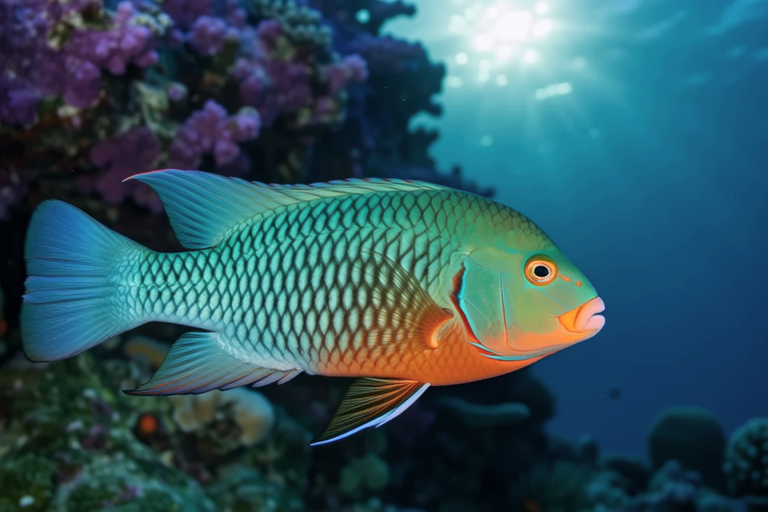
The Enigmatic Parrot Fish: A Dive into Marine Ecosystems
Parrotfish are among the most captivating creatures found in the world’s oceans. These vibrant, often colorful fish play a crucial role in maintaining the health of coral reefs, one of the most diverse and important ecosystems on Earth. Their unique adaptations, striking coloration, and complex behaviors make them an intriguing subject for marine biologists and enthusiasts alike.
A Diverse Array of Adaptations
Parrotfish possess several remarkable adaptations that enable them to thrive in their marine habitats. One of the most distinctive features of parrotfish is their teeth, which are fused into a beak-like structure, ideal for scraping algae off coral and rocks. This adaptation not only aids in feeding but also helps maintain the structural integrity of coral reefs by preventing overgrowth of algae. The teeth are constantly growing and worn down as the fish feed, ensuring they always have a functional set.
In addition to their specialized dentition, parrotfish have evolved thick, bony plates that protect their heads and eyes. These plates act as armor, providing protection against predators while allowing the fish to move through coral reefs with relative ease. The scales of parrotfish are also modified into small, overlapping plates, further enhancing their defensive capabilities. This combination of physical defenses makes parrotfish well-suited to life in the competitive and sometimes dangerous environments of coral reefs.
Vibrant Coloration: A Kaleidoscope Underwater
Parrotfish are renowned for their dazzling array of colors, which can range from bright yellows and blues to deep reds and purples. This vibrant coloration serves multiple purposes, including camouflage and communication. Many species of parrotfish exhibit countershading, where the upper body is darker than the underside, making it difficult for predators to spot them from above or below.
During mating season, parrotfish display even more intense and varied hues. Males, in particular, become incredibly colorful to attract females and deter rivals. The exact mechanisms behind these color changes are still being studied, but it is believed that they involve the rapid production and distribution of pigments in specialized cells called chromatophores. Recent research has shown that certain environmental factors, such as water temperature and light intensity, can influence the expression of these colors.
The Role of Parrotfish in Coral Reef Health
Parrotfish play a vital role in the maintenance of coral reefs, acting as “coral gardeners.” By grazing on algae, they prevent it from overgrowing and smothering corals, which can lead to their death. This process is essential for the survival of coral reefs, which provide habitat for countless marine species and support global fisheries. In some areas, the loss of parrotfish due to overfishing has been linked to increased algal growth and reduced coral cover.
Recent studies have also highlighted the importance of parrotfish in promoting biodiversity within coral reefs. By creating and maintaining open spaces, they allow for the settlement and growth of new coral colonies. This, in turn, supports a wider variety of marine life, contributing to the overall health and resilience of the ecosystem.
Dietary Habits and Feeding Mechanisms
The diet of parrotfish primarily consists of algae, which they consume using their powerful beaks. They also feed on small invertebrates and detritus found on the reef. The process of feeding involves scraping algae from rocks and coral surfaces, which creates small amounts of sand. Over time, this activity contributes significantly to the formation of sandy beaches along coastlines.
Interestingly, the digestive system of parrotfish is specially adapted to handle the tough and fibrous nature of their food. Their stomachs contain high concentrations of hydrochloric acid, which breaks down the indigestible components of algae. This allows them to extract nutrients efficiently, despite the challenging composition of their diet. Additionally, parrotfish produce a special mucus cocoon each night, which they wrap themselves in to protect against parasites and predators.
Behavior and Social Structure
Parrotfish are generally solitary creatures, but they can form large schools during feeding and spawning events. These schools can consist of hundreds of individuals, creating a spectacular sight for divers and snorkelers. When not feeding, parrotfish tend to remain close to their home territories, which they defend against intruders.
Mating in parrotfish typically occurs during specific times of the year, with males establishing territories and performing elaborate courtship displays to attract females. Once a pair has formed, they will release eggs and sperm into the water column, where fertilization takes place externally. The resulting larvae drift with ocean currents before settling on suitable reef habitats.
Recent Studies and Findings
Scientists continue to uncover new information about parrotfish biology and behavior. For example, recent research has focused on understanding the genetic basis of their color-changing abilities. By studying the genes responsible for pigment production and distribution, researchers hope to gain insights into how these processes are regulated and how they might be influenced by environmental factors.
Another area of interest is the impact of climate change on parrotfish populations. As ocean temperatures rise and coral reefs face increasing stress, there are concerns about how this might affect the availability of food and shelter for these fish. Some studies suggest that warmer waters could alter the timing of spawning events or reduce reproductive success, potentially leading to declines in population numbers.
Conclusion
Parrotfish are truly fascinating creatures, offering a window into the intricate relationships between organisms within marine ecosystems. Their unique adaptations, vibrant coloration, and critical role in coral reef health make them invaluable members of underwater communities. As we continue to learn more about these remarkable fish, it becomes increasingly clear that protecting them is essential for preserving the health and diversity of our oceans.
