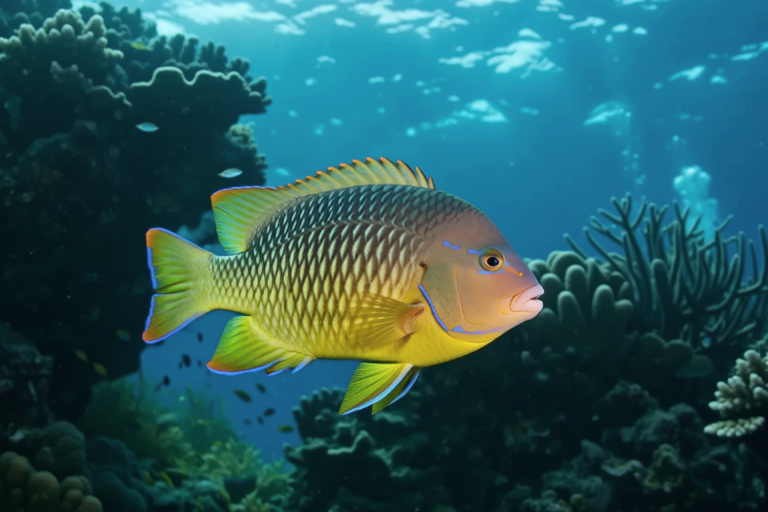
The Vibrant Lives of Parrot Fish: Colors and Communication in Marine Ecosystems
Parrot fish are some of the most visually stunning inhabitants of coral reefs and other marine environments. Their diverse colorations and dynamic behaviors have long fascinated scientists and nature enthusiasts alike. From dazzling blue to vibrant red, these fish display an array of hues that serve various purposes, including camouflage, mating displays, and social communication. This article delves into the fascinating world of parrot fish, exploring the biological mechanisms behind their color changes, their behaviors, and recent studies on their communication strategies.
Biological Mechanisms Behind Color Changes
The vivid coloration of parrot fish is primarily due to specialized cells called chromatophores, which contain pigments responsible for producing different shades. These cells can expand or contract, allowing parrot fish to change their appearance rapidly. Some species also have structural coloration, where light interacts with microscopic structures in their skin, creating iridescent or metallic effects. This adaptability enables parrot fish to blend into their surroundings, attract mates, or signal dominance within their social hierarchy.
Vibrant Hues for Camouflage and Mating Displays
Many parrot fish species exhibit bold, contrasting colors that help them stand out against the backdrop of coral reefs. For instance, the queen parrot fish (Scarus vetula) has a striking combination of blue, yellow, and green, while the midnight parrot fish (Sparisoma viride) features dark purple and black tones. These colors not only make them more visible to potential mates but also serve as effective camouflage when viewed from different angles. The intricate patterns on their scales can break up their outline, making it harder for predators to spot them.
During mating season, male parrot fish often intensify their colors to attract females and intimidate rivals. In some cases, they may even develop temporary patches of bright red or orange on their bodies. This phenomenon is particularly noticeable in species like the stoplight parrot fish (Sparisoma viride), whose males display vivid red and blue stripes during courtship rituals. Females, in contrast, tend to have more subdued coloration throughout most of their lives, with some exceptions during spawning events.
Communication Through Colors
Recent research suggests that parrot fish use their colors not just for attracting mates but also for communicating with members of their own species. Studies have shown that certain color patterns can indicate health, age, or reproductive status, allowing individuals to assess potential partners or rivals without physical contact. For example, a brightly colored male might be signaling its genetic fitness to prospective mates, while a less conspicuous individual could be advertising its subordinate role within a group.
Some parrot fish species engage in complex social interactions involving color-based signals. Researchers have observed that territorial disputes between males often involve posturing displays where each participant attempts to outshine the other through exaggerated color changes. These contests typically end with one party backing down rather than escalating into physical confrontation. Such behavior helps maintain order within populations and reduces unnecessary aggression.
Species-Specific Color Patterns
There are over 90 recognized species of parrot fish worldwide, each displaying unique combinations of colors and patterns. Here we highlight a few notable examples:
- Queen parrot fish (Scarus vetula): This large species boasts a striking combination of blue, yellow, and green. Its coloration varies depending on age and sex; juveniles tend to be more uniformly colored, whereas adults show greater variation.
- Stoplight parrot fish (Sparisoma viride): Known for its distinctive red and blue stripes, this medium-sized fish inhabits shallow waters along North America’s Atlantic coast. Males become especially vibrant during breeding seasons.
- Midnight parrot fish (Sparisoma viride): With its deep purple and black hues, this small-to-medium sized species thrives in deeper parts of Caribbean reefs. It uses its dark coloring to blend seamlessly with surrounding rocks and corals.
- Bolbometopon muricatum: Also known as bumphead parrotfish, this massive species can grow up to 1 meter long and weigh over 45 kg. Its olive-green body is adorned with white spots, giving it a distinctive appearance.
Conservation Status and Threats
Despite their popularity among divers and aquarium hobbyists, many parrot fish face significant challenges in their natural habitats. Overfishing remains one of the primary threats, as demand for live specimens drives unsustainable harvesting practices in certain regions. Additionally, habitat destruction caused by climate change, pollution, and coastal development poses severe risks to reef ecosystems where parrot fish reside.
Several organizations work tirelessly to protect parrot fish populations and promote sustainable fishing methods. Initiatives include establishing marine protected areas, enforcing stricter regulations on catch limits, and raising public awareness about the importance of preserving these vibrant creatures. By supporting conservation efforts and reducing our environmental impact, we can help ensure that future generations continue to enjoy the beauty and diversity of parrot fish in their natural settings.
Conclusion
The vibrant lives of parrot fish offer a captivating glimpse into the wonders of marine ecosystems. Through their striking hues and dynamic behaviors, these fascinating creatures demonstrate remarkable adaptability and intelligence. As researchers uncover more about how parrot fish use color for communication, we gain valuable insights into the complexities of animal social dynamics. By appreciating and protecting these colorful inhabitants of our oceans, we contribute to the preservation of Earth’s rich biodiversity.
