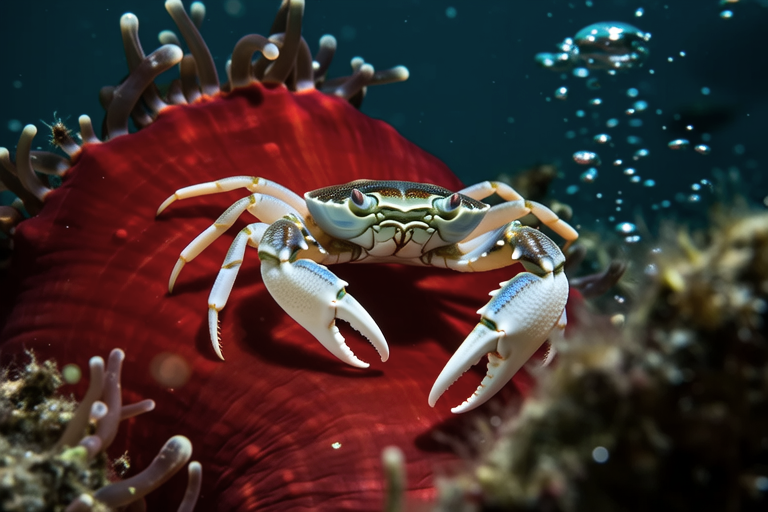
From Ocean Depths to Your Aquarium: A Guide to Keeping Pea Crabs
Welcome to a fascinating journey into the world of pea crabs, tiny crustaceans that offer a unique and enriching experience for aquarists. These creatures, native to the ocean depths, have adapted to live in harmony with other marine life, forming intricate symbiotic relationships. This guide will walk you through the process of bringing these delicate creatures into your home aquarium, ensuring they thrive and bring joy to your aquatic ecosystem.
The World of Pea Crabs
Pea crabs (Pinnotheridae) are small, soft-bodied crustaceans named for their resemblance to peas in size and color. They are found in various marine environments worldwide, primarily living inside bivalves such as oysters, clams, and mussels. Unlike typical aquarium species, pea crabs do not scavenge or hunt; instead, they rely on their host for protection and nutrients. Their small size makes them challenging to spot, but their presence can add a layer of intrigue to any marine aquarium.
Symbiotic Relationships
One of the most intriguing aspects of pea crabs is their symbiotic relationship with their hosts. These tiny crustaceans often live inside the mantle cavity of their host, where they feed on plankton and organic matter filtered by the host. In return, the pea crab provides protection against parasites and predators that might otherwise harm the bivalve. This mutualistic relationship highlights the complexity and beauty of marine ecosystems.
Aquarium Setup Requirements
Water Parameters
To ensure a healthy environment for pea crabs, it’s crucial to maintain optimal water conditions. Pea crabs prefer slightly brackish water with a specific gravity of around 1.005 to 1.010. The pH level should be between 7.8 and 8.4, and the temperature should range from 68°F to 78°F (20°C to 26°C). Regular testing and maintenance of these parameters are essential for the well-being of your pea crabs.
Tank Mates
Selecting appropriate tank mates is vital when housing pea crabs. They should ideally share their tank with compatible species that do not pose a threat. Suitable companions include small, peaceful fish like guppies, mollies, and dwarf gouramis. Avoid aggressive or large species that may prey on the crabs or compete for food resources.
