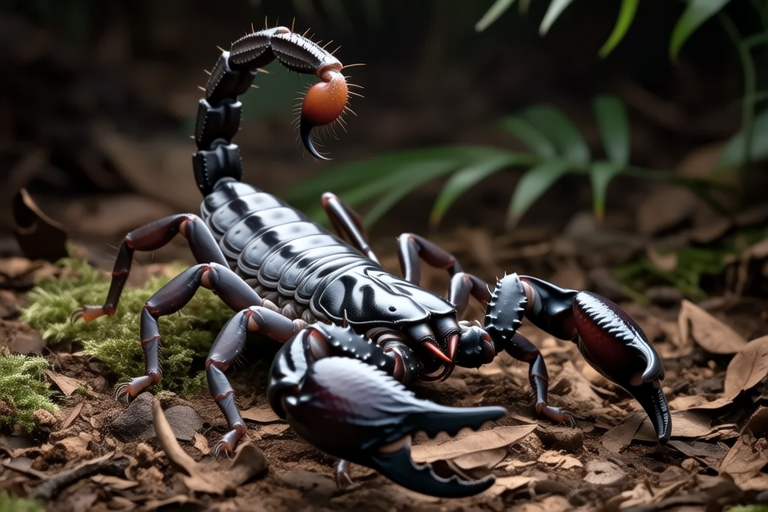
Heterometrus Spinifer: The Enigmatic Scorpion of Southeast Asia
Introduction
The world of arachnids is vast and diverse, filled with creatures that have adapted to various environments and lifestyles. Among these fascinating creatures is Heterometrus spinifer, a scorpion species native to Southeast Asia. This article delves into the unique physical characteristics, habitat, diet, and behavior of Heterometrus spinifer. By comparing it with related species, we will highlight lesser-known facts and hidden talents that make this scorpion truly intriguing.
Physical Characteristics
One of the most striking features of Heterometrus spinifer is its robust body structure. Adult specimens can reach lengths of up to 12 centimeters, making them one of the larger scorpions found in their region. Their bodies are covered in a thick exoskeleton, providing protection against predators and harsh environmental conditions. The exoskeleton also plays a crucial role in regulating moisture levels within the scorpion’s body, which is essential for survival in arid habitats.
Perhaps the most distinctive feature of Heterometrus spinifer is its tail, which ends in a large venomous stinger. This stinger contains neurotoxins that paralyze prey and deter potential threats. The venom composition varies among individuals and populations, but generally, it targets the nervous system of smaller animals. While the sting can be painful for humans, it is rarely life-threatening unless the individual has an allergic reaction.
Another notable characteristic of Heterometrus spinifer is its pincers or pedipalps. These appendages are powerful and versatile tools used for capturing prey, defense, and communication. The size and shape of the pincers can vary between males and females, with males often having longer and more slender claws. This difference in morphology reflects the different roles they play within their social structure.
Habitat and Distribution
Heterometrus spinifer is primarily found in tropical rainforests, caves, and rocky outcrops throughout Southeast Asia. It thrives in humid environments characterized by high rainfall and dense vegetation. However, some populations have adapted to living in drier areas, demonstrating remarkable versatility in their ability to inhabit diverse ecosystems.
These scorpions prefer dark, secluded spaces such as crevices in rocks, under logs, or within tree hollows. They are nocturnal creatures, emerging at night to hunt and avoid the heat of the day. This behavior helps conserve energy and reduces water loss through evaporation. Despite their preference for darkness, Heterometrus spinifer has excellent vision and can detect movement even in low light conditions.
Comparing Heterometrus spinifer with other related species reveals interesting differences in habitat preferences. For example, Heterometrus laoticus tends to inhabit open grasslands and savannas, while Heterometrus fulvipes is more commonly found near water sources like rivers and streams. These variations in distribution highlight the adaptability of scorpions to different ecological niches.
Diet and Feeding Behavior
The diet of Heterometrus spinifer consists mainly of insects, spiders, and small vertebrates. They are opportunistic hunters, patiently waiting for prey to come within striking distance before attacking with their venomous stinger and powerful pincers. Once captured, the prey is immobilized by the venom and then consumed by the scorpion.
Interestingly, Heterometrus spinifer has been observed engaging in cannibalism when food sources are scarce. This behavior underscores the importance of resource availability in shaping the feeding habits of these scorpions. Cannibalism may also serve as a mechanism for population control, ensuring that only the strongest individuals survive during times of limited resources.
Recent scientific studies have explored the digestive capabilities of Heterometrus spinifer
