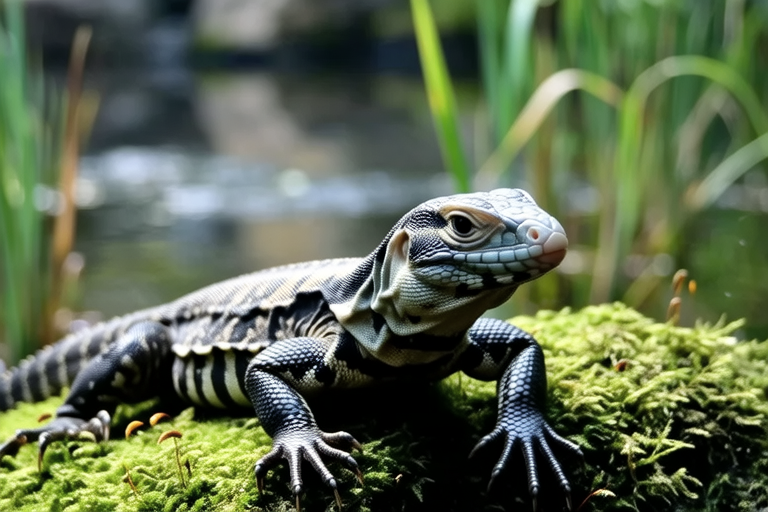
From Swamp to Home: A Comprehensive Guide to Water Monitors
Water monitors (Varanus salvator) are some of the most fascinating reptiles in the world. These large lizards can be found across Southeast Asia, from India to Indonesia. Their natural habitat and behavior make them captivating subjects for study and admiration. However, their impressive size and unique needs also make them challenging pets. This guide will provide an overview of water monitors’ natural habitat and behavior, as well as detailed instructions for housing, feeding, and maintaining their health as pets.
Natural Habitat and Behavior
Water monitors are semi-aquatic lizards that thrive in swampy areas, rivers, and mangroves. They are excellent swimmers and can stay submerged for long periods. In the wild, they are highly territorial and aggressive, often seen basking on branches or rocks near water bodies. Their diet consists of a wide range of prey, including fish, frogs, birds, and small mammals. Water monitors are known for their keen sense of smell, which helps them locate food even in murky waters.
Housing Requirements
Tank Size
Adequate space is crucial for the well-being of your water monitor. For a juvenile, a 4x2x2-foot enclosure is sufficient, but as they grow, you’ll need to upgrade to a larger tank, ideally 8x4x4 feet or more. Ensure the enclosure has plenty of vertical space for climbing, as water monitors are arboreal and enjoy perching high up. The tank should have secure locks to prevent escapes, as these lizards are strong and curious.
Temperature and Humidity
Water monitors require a warm environment with a temperature gradient ranging from 85°F to 95°F. Basking spots should reach around 100°F. Use under-tank heaters, heat lamps, or ceramic heat emitters to achieve these temperatures. Maintain humidity levels between 60% and 80%, which can be achieved through misting systems, water bowls, and humidifiers. Regularly check the humidity and temperature to ensure they remain within the recommended ranges.
Substrate and Decorations
The substrate should be easy to clean and safe for the lizard. Cypress mulch, coconut fiber, or reptile-safe bark chips are good options. Avoid sand, gravel, or wood shavings that could cause impaction if ingested. Provide hiding spots, climbing structures, and water areas. Logs, branches, and cork flats make excellent perches. A large water bowl or pool should be available for swimming and soaking.
Feeding and Nutrition
Water monitors are carnivorous and require a varied diet rich in protein. Juveniles can be fed daily, while adults should eat every two to three days. Suitable food items include mice, rats, feeder fish, insects, and occasionally eggs. Offer a mix of live and pre-killed prey to keep their diet interesting and nutritionally balanced. Ensure all food items are appropriately sized for the lizard’s age and size to avoid choking hazards.
Maintaining Health
Regular veterinary check-ups are essential for keeping your water monitor healthy. Monitor for signs of illness such as lethargy, loss of appetite, or unusual skin coloration. Common health issues include respiratory infections, parasites, and metabolic bone disease. Proper hygiene and a balanced diet can help prevent many of these problems. Clean the enclosure regularly, disinfecting all surfaces and equipment to maintain a hygienic environment.
Handling and Socialization
Water monitors are generally wary of human contact and may become defensive if threatened. Handle them gently and consistently to build trust. Start by allowing the lizard to get used to your presence before attempting to pick it up. Always support its body fully when holding it, and never grab it by the tail, as this can cause injury. Some water monitors can be socialized to tolerate handling, but patience and respect are key.
Tips for Potential Owners
Owning a water monitor is a significant commitment that requires careful consideration. These lizards can live for 10 to 20 years or more, so think about the long-term responsibility. Ensure you have the resources and space to accommodate their growing needs. Research thoroughly before making a decision, and consult experienced breeders or veterinarians for guidance. Join online forums and local reptile groups to connect with other enthusiasts and learn from their experiences.
Conclusion
Water monitors are remarkable creatures with unique behaviors and care requirements. By understanding their natural habitat and needs, you can create a suitable environment for them as pets. With proper housing, feeding, and handling, water monitors can make rewarding companions for dedicated reptile enthusiasts. Remember, owning one of these magnificent lizards is a long-term commitment that demands time, effort, and resources. Approach this decision with care and consideration for both you and your potential new pet.
