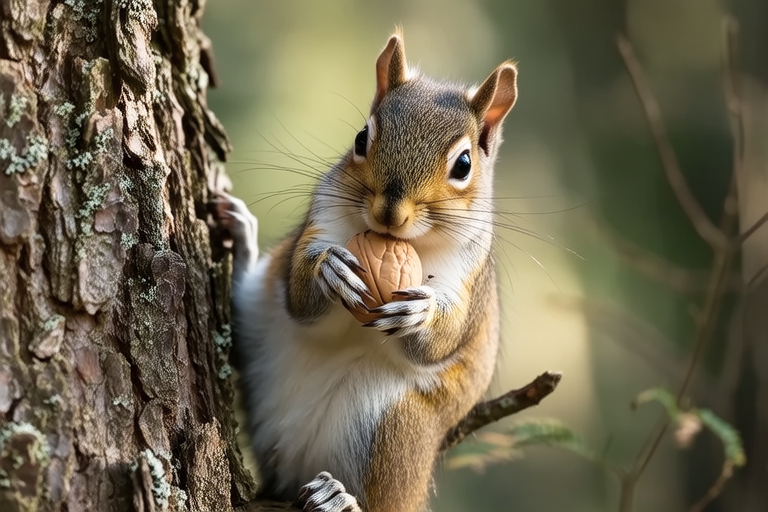
Top 10 Surprising Facts About Squirrels You Never Knew
Squirrels, those ubiquitous creatures that dart across city parks and rural woodlands alike, are more than just cute little animals that chase after nuts. These nimble rodents have fascinating behaviors and biological traits that make them one of nature’s most intriguing creatures. Let’s dive into the top 10 surprising facts about squirrels you never knew.
Fact 1: Squirrels Have an Amazing Memory
One of the most remarkable abilities of squirrels is their exceptional memory. They can remember the location of thousands of hidden caches of food, a skill that is crucial for their survival during winter when food sources are scarce. This ability is linked to their hippocampus, a part of the brain responsible for spatial memory and navigation. Scientists believe this memory function has evolved over millions of years to help squirrels thrive in environments where finding food is a constant challenge.
Not only do they remember where they’ve stashed their nuts, but they also know which ones are worth eating. This selective memory helps them avoid previously rejected foods, making their foraging efforts more efficient. The next time you see a squirrel burying its acorn, remember it might be planning for the long winter ahead.
Fact 2: Squirrels Can Dive Bomb Birds
Believe it or not, squirrels can be quite aggressive when it comes to defending their territory, especially against birds. If a bird ventures too close to a squirrel’s nest, the squirrel may launch itself from a tree branch, aiming for the bird’s head. While this behavior is rare, it highlights the protective instincts of these small mammals. This aggressive behavior is often seen as a way for squirrels to ensure their offspring’s safety, driving away potential threats.
This territorial behavior is just one aspect of the complex social dynamics within squirrel communities. Next, let’s explore how squirrels communicate with each other.
Fact 3: Squirrels Communicate Using Body Language
Squirrels are highly communicative animals, using a variety of vocalizations and body language to convey messages. They can express alarm, attraction, and aggression through different tail movements, postures, and sounds. For example, a flicking tail can signal danger, while a bushy tail may indicate excitement or dominance. Understanding these signals requires keen observation, as each gesture can carry significant meaning within their community.
While communication plays a vital role in squirrel society, it’s not just about sending messages. Squirrels also engage in behaviors that help them survive in their environment. The next fact will introduce you to one such behavior.
Fact 4: Squirrels Are Natural Bridge Builders
In some areas, particularly in dense forests, squirrels have been observed constructing bridges between trees. These bridges are made from twigs, leaves, and other materials, allowing them to travel safely from one tree to another without having to descend to the ground. This behavior is particularly useful in avoiding predators and reaching food sources that might otherwise be out of reach. Building these bridges demonstrates the resourcefulness and adaptability of squirrels.
These natural architects are not just building bridges; they’re also creating pathways that connect different parts of their territory. This leads us to our next point about how squirrels navigate their world.
Fact 5: Squirrels Navigate Using Magnetic Fields
Recent studies suggest that squirrels may possess the ability to navigate using Earth’s magnetic fields. This unique sense, known as magnetoreception, allows them to orient themselves accurately even in unfamiliar environments. While the exact mechanism behind this ability is still under investigation, it’s believed to involve specialized cells in the squirrel’s brain that respond to magnetic stimuli. This navigational skill is crucial for finding food caches and navigating through complex habitats.
With their keen sense of direction, squirrels can traverse vast distances with ease. However, they also face challenges in their environment. The next fact explores one of the ways squirrels cope with urbanization.
Fact 6: Squirrels Thrive in Urban Environments
Contrary to popular belief, squirrels are highly adaptable to urban life. They have successfully colonized cities around the world, thriving in environments that would be inhospitable to many other wild animals. In urban settings, squirrels have learned to exploit human-provided resources, such as bird feeders and garbage cans, to supplement their diet. Their ability to adjust to new conditions showcases their resilience and ingenuity.
Adapting to city life has its perks, but it also brings new risks. Let’s explore how squirrels deal with the dangers of urban living.
Fact 7: Squirrels Are Expert Drivers
Squirrels have developed an uncanny ability to navigate traffic, crossing roads with apparent ease. Studies have shown that they can assess the speed and distance of approaching vehicles, choosing the safest moment to cross. This skill is essential for their survival in urban areas, where roadways are a constant presence. Their ability to judge traffic flow demonstrates a level of cognitive processing that is quite advanced for such small creatures.
Despite their impressive skills, squirrels still face numerous challenges in their daily lives. The next fact reveals how they manage to stay warm in cold weather.
Fact 8: Squirrels Build Warm Winter Nests
To survive harsh winters, squirrels construct cozy nests called dreys, typically made from twigs, leaves, and moss. These nests provide insulation against the cold and protection from predators. Some species, like the red squirrel, even line their nests with soft materials like fur or feathers for added warmth. The construction of these nests is a testament to the squirrels’ resourcefulness and their ability to prepare for challenging conditions.
Building a warm home is just one part of a squirrel’s winter survival strategy. Let’s see what else they do to get through the colder months.
Fact 9: Squirrels Hibernate During Winter
Many people assume that all squirrels hibernate during winter, but this isn’t entirely accurate. Ground squirrels, like the thirteen-lined ground squirrel, do enter a state of torpor, reducing their metabolic rate and body temperature to conserve energy. Tree squirrels, on the other hand, remain active throughout the winter, relying on stored food caches for sustenance. This difference in behavior highlights the diversity within the squirrel family and their varied strategies for survival.
As we’ve seen, squirrels have adapted numerous strategies to survive in their environments. The final fact will take us beyond their physical adaptations to explore their interactions with humans.
Fact 10: Squirrels Influence Human Behavior
Surprisingly, squirrels have a subtle influence on human behavior, particularly in urban areas. Their presence encourages people to visit parks and green spaces, fostering a connection with nature. Additionally, observing squirrels can inspire curiosity and appreciation for wildlife, contributing to environmental awareness. This interaction between squirrels and humans underscores the importance of coexistence and conservation efforts.
In conclusion, squirrels are far more than just the charming creatures we see scurrying through our parks and gardens. From their remarkable memory to their ability to navigate traffic, these small animals display a wide range of fascinating behaviors and adaptations. Understanding and appreciating these aspects of squirrel life not only enriches our knowledge of wildlife but also highlights the intricate relationships between species and their environments.
