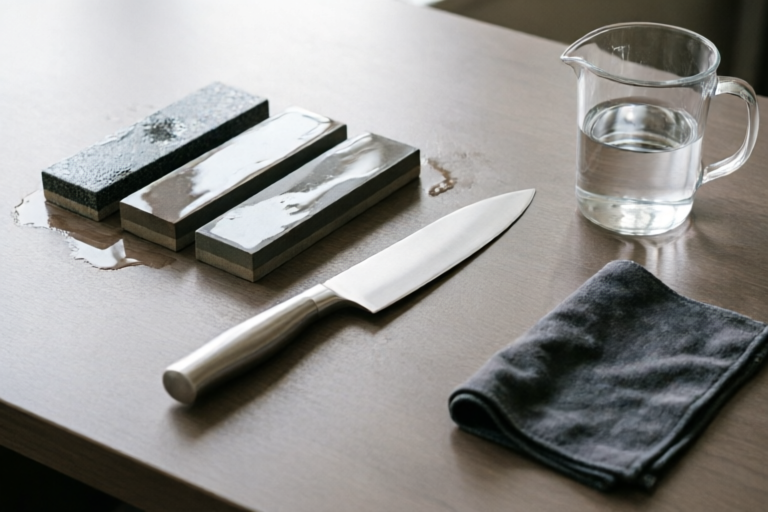
How to Sharpen Knives Like a Pro
Master the art of knife sharpening for a safer and more efficient kitchen experience.
Introduction: Why Knife Sharpening Matters
Importance of maintaining sharp knives: Sharp knives are not only more effective but also safer to use. A dull knife requires more force to cut through food, increasing the risk of accidents. Additionally, sharp knives help in achieving cleaner cuts, which is crucial for both culinary professionals and home cooks.
Benefits of professional knife sharpening techniques: Learning how to sharpen knives properly can save you money by eliminating the need for frequent replacements. It also allows you to maintain the quality of your knives over time, ensuring they perform optimally every time you use them.
Common mistakes beginners make: Many people neglect their knives until they become too dull, leading to frustration and wasted effort. Others may try to sharpen their knives too often, wearing down the blade unnecessarily. Understanding the right frequency and technique is key to successful knife maintenance.
Essential Tools and Materials Needed
Types of Sharpening Stones
Waterstones: These are popular among professionals due to their ability to create an extremely sharp edge. They require water as a lubricant, which helps in creating a fine slurry that aids in sharpening.
Oilstones: Ideal for those who prefer a less messy option, oilstones use mineral oil as a lubricant. They are generally easier to maintain than waterstones.
Diamond stones: Known for their durability and speed, diamond stones are great for quick touch-ups. However, they can be harsher on the blade compared to other types of stones.
Honing Rods and Their Role
A honing rod is used to realign the edge of the blade rather than sharpen it. Regular honing helps maintain the sharpness between sharpenings and keeps the blade in good condition.
Proper Storage Solutions for Knives
Storing knives properly is just as important as sharpening them. Use magnetic strips, knife blocks, or drawer inserts designed specifically for knives to prevent damage and ensure longevity.
Basic Techniques for Beginners
Understanding the Angle of Sharpening
The angle at which you hold the knife against the sharpening stone is crucial. Typically, a 15-20 degree angle is recommended for most kitchen knives. This ensures a balance between sharpness and durability.
Step-by-Step Guide on Using a Sharpening Stone
- Soak the waterstone in water for about 10 minutes if using one.
- Wet the surface of the stone with water or apply a few drops of oil if using an oilstone.
- Hold the knife at the correct angle and move it across the stone, maintaining consistent pressure and motion.
- Repeat on the opposite side of the blade.
- Use a honing rod to realign the edge after sharpening.
Tips for Honing Your Knife Between Sharpenings
Regular honing helps maintain the edge between sharpenings. Use a honing rod before each cooking session to ensure your knife remains sharp throughout your meal preparation.
Advanced Sharpening Methods for Experts
Using Electric Sharpeners for Precision
Electric sharpeners offer a quick and convenient way to sharpen knives. They provide precise control over the angle and speed, making them ideal for those who want professional results without the hassle of manual sharpening.
Hand-Held Sharpeners for Portability
\nFor those who travel frequently or need a portable solution, hand-held sharpeners are a great option. They are compact, easy to carry, and provide consistent results wherever you go.
Specialized Techniques for Serrated or Pocket Knives
Serrated knives require a different approach. Use a specialized sharpening tool designed for serrations to maintain their cutting edge. For pocket knives, consider using a strop or leather belt for honing.
Maintaining Your Sharpened Edge
Best Practices for Storing and Handling Your Knives
Always store knives properly to prevent damage. Avoid leaving them in drawers where they can be damaged by other utensils. Use protective sheaths when transporting knives to keep them safe.
Frequency of Sharpening Based on Usage
The frequency of sharpening depends on how often you use your knives. As a general rule, you should sharpen your knives every 3-6 months or whenever you notice a significant loss in sharpness.
Troubleshooting Common Issues with Dull Blades
If your knives are becoming dull too quickly, check your sharpening technique and ensure you're using the correct angle. Also, make sure you're not overusing your knives on hard materials like bones or frozen foods.
Conclusion: Achieving Professional Results at Home
Recap of key points discussed: We've covered the importance of maintaining sharp knives, essential tools needed, basic and advanced sharpening techniques, and tips for maintaining your sharpened edge. By following these guidelines, you can achieve professional results in the comfort of your own home.
Encouragement to practice regularly: Practice makes perfect, especially when it comes to knife sharpening. The more you practice, the better you'll become at maintaining your knives.
Resources for further learning and improvement: Consider watching online tutorials, attending workshops, or reading books on knife sharpening to deepen your knowledge and improve your skills. With dedication and consistent practice, you'll soon be sharpening like a pro.
Comments

Tried it and... nothing happened. Am I doing something wrong? Maybe I need to go see a pro first?

I've been using these tips for a month now and my knives stay sharper longer. Thanks for the best practices on storage!

Any advice for sharpening serrated knives? The steps here work well for straight edges but my bread knife is still a bit tricky.

Super helpful! My kitchen knives were so dull they were almost useless. Now they're like new again. Will definitely be practicing more.

This is fantastic! For those who struggle with honing, try this: instead of moving the rod towards you, move it away from you. It makes a huge difference!

I tried the electric sharpener for my pocket knife. It was super fast but felt a bit too aggressive. Any tips on controlling the pressure?
Great tutorial! Just one question though, do I really need both a waterstone and an oilstone? Can't I just stick to one?
Worked like a charm! Finally got my chef's knife back to its razor-sharp glory. Thanks for the detailed steps, especially on the angle part.