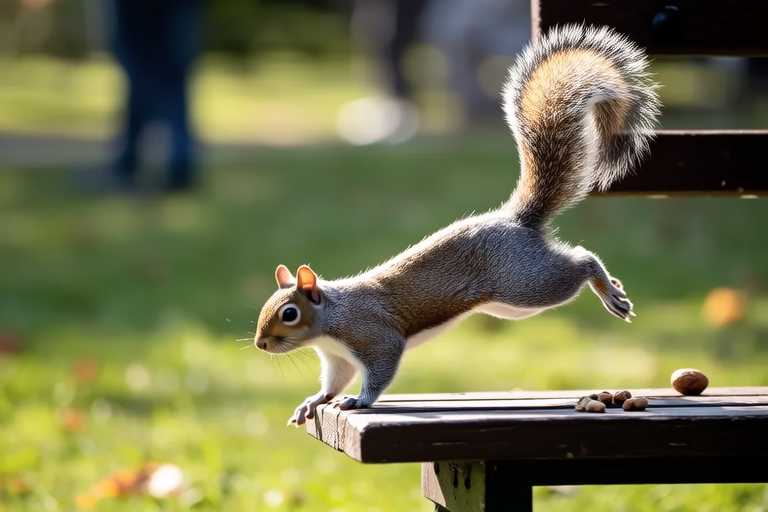
Meet the Acrobats of Your Local Park: Why We Can’t Resist These Charming Squirrels
Welcome to your local park, where the stars of the show are not just the lush greenery or the serene ponds but also the playful acrobats that scamper up trees and leap across branches. These charismatic creatures are none other than the squirrels, whose antics never fail to bring smiles to the faces of park-goers. From their nimble movements to their industrious habits, these small mammals have captured our hearts and imaginations. Let’s delve into the fascinating world of these delightful rodents and explore why we can’t help but be charmed by them.
The Playful Nature of Squirrels
Squirrels are known for their playful and agile nature, which makes them a favorite among park visitors. Their ability to leap from branch to branch with grace and precision is nothing short of impressive. Whether it’s a red squirrel with its bushy tail or a gray squirrel with its sleek coat, each species brings its unique flair to the park’s ecosystem. Watching these tiny acrobats dart through the trees or chase one another around the playground is a joy that never gets old.
One of the most entertaining behaviors of squirrels is their play-fighting. Young squirrels engage in mock battles, pouncing and wrestling with each other. This playful behavior helps them develop essential skills needed for survival, such as agility, strength, and coordination. It’s heartwarming to see these little creatures engage in what seems like a game, yet it’s crucial for their growth and development.
Foraging and Food Storage
One of the most fascinating aspects of squirrels’ lives is their relationship with food. These resourceful creatures spend a significant portion of their day foraging for nuts, seeds, fruits, and even insects. They have an innate sense of where to find the best sources of sustenance, often digging through leaf litter or climbing trees to reach their hidden treasures.
But what truly sets squirrels apart is their remarkable ability to store food for later use. During autumn, when nuts and seeds are abundant, squirrels engage in a process called caching. They bury or hide food in various locations throughout their territory, creating a sort of pantry for the leaner winter months. This behavior showcases their intelligence and adaptability, ensuring their survival during times of scarcity.
Interestingly, not all of the cached food is recovered by the squirrels themselves. Some of these hidden treasures germinate and grow into new trees, playing a crucial role in forest regeneration. This natural seed dispersal mechanism contributes significantly to the health and diversity of the ecosystem.
Climbing and Nesting Habits
When it comes to climbing, squirrels are true masters. Their sharp claws and strong limbs enable them to scale trees with ease, making them perfectly adapted to their arboreal lifestyle. They can navigate narrow branches, leap between gaps, and even hang upside down if necessary. This dexterity allows them to access food sources that might otherwise be out of reach for ground-dwelling animals.
In addition to their climbing prowess, squirrels are skilled at building nests called dreys. Typically constructed in the forks of trees, these cozy structures provide shelter from harsh weather conditions and protect them from predators. Dreys are usually made from twigs, leaves, and other materials found in the surrounding environment, showcasing the squirrels’ resourcefulness and ingenuity.
The Ecological Role of Squirrels
Beyond their playful antics and resourceful behaviors, squirrels play a vital role in maintaining the ecological balance of their habitats. As mentioned earlier, their caching activities contribute to forest regeneration by spreading seeds across the landscape. Additionally, squirrels act as prey for larger predators such as birds of prey, foxes, and snakes, thus influencing predator populations within the ecosystem.
Moreover, squirrels serve as indicators of environmental health. A thriving squirrel population suggests that the local ecosystem is functioning well, with sufficient resources available to support both predators and prey. Conversely, a decline in squirrel numbers could signal issues within the ecosystem, prompting conservation efforts to address potential problems.
Adaptability and Interaction with Humans
What truly sets squirrels apart from many other wild animals is their remarkable adaptability. While some species prefer undisturbed forests, others have successfully colonized urban environments, thriving alongside human populations. In cities, squirrels have learned to exploit human-provided resources, such as bird feeders and garbage cans, expanding their diet beyond what would be available in their natural habitat.
This close proximity to humans has led to increased interactions between squirrels and people. Many park-goers enjoy feeding squirrels, a practice that can sometimes lead to dependency on handouts. However, it’s important to remember that providing too much food can disrupt the natural balance and lead to overpopulation or health issues among the squirrel population.
Despite these challenges, squirrels continue to captivate us with their charm and resilience. Their ability to thrive in diverse environments speaks volumes about their adaptability and resourcefulness. Whether you’re watching them play in the park or marveling at their acrobatic feats, there’s no denying the special place squirrels hold in our hearts.
A Call to Action: Respectful Observation and Coexistence
As we’ve seen, squirrels are more than just cute and playful animals; they are integral members of their ecosystems, contributing to the health and diversity of their environments. By appreciating their role in nature, we can foster a deeper connection with these charming creatures and promote respectful coexistence.
To ensure that future generations can enjoy the antics of squirrels in our local parks, it’s essential to observe them responsibly. Avoid feeding them directly, as this can lead to unhealthy dependencies. Instead, admire their natural behaviors from a distance and share your experiences with others. Encourage children to learn about wildlife and the importance of preserving natural habitats. Together, we can create a harmonious relationship between humans and squirrels, ensuring that these delightful acrobats continue to brighten our days for years to come.
So next time you visit your local park, take a moment to observe the squirrels at play. Watch them leap, climb, and forage, and appreciate the vital role they play in their ecosystem. With a little care and respect, we can all enjoy the company of these charming creatures while helping to preserve their natural habitats for future generations.
