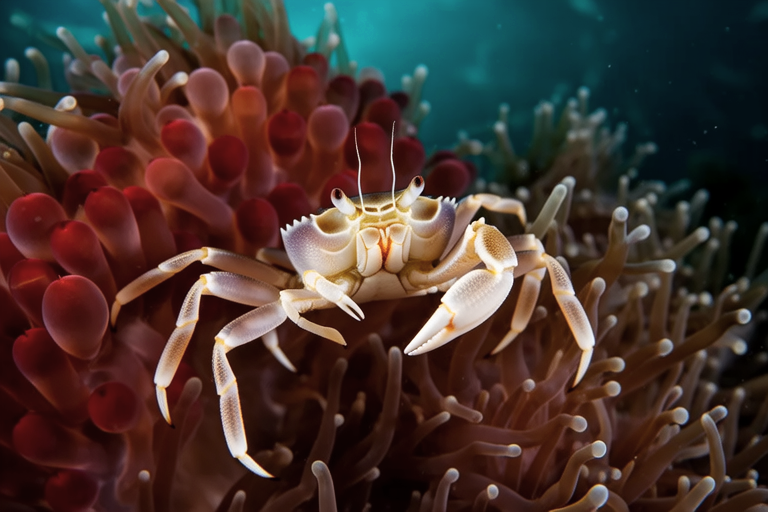
Pea Crabs: Unique Marine Inhabitants That Live Within Other Animals
Introduction:
Pea crabs (Pinnotheres spp.) are small crustaceans that have captured the fascination of marine biologists due to their remarkable ability to live symbiotically inside other marine animals. These tiny crustaceans, typically measuring between 3 to 8 millimeters in length, have evolved a unique lifestyle that allows them to thrive within the bodies of their hosts. Their most distinctive feature is their intimate association with various marine organisms, forming intricate relationships that highlight the complexity of marine ecosystems.
The Hosts of Pea Crabs:
Pea crabs can be found inhabiting a diverse range of marine animals, including sea cucumbers, barnacles, and bivalves like clams and oysters. The choice of host varies among different species of pea crabs. For instance, Pinnotheres pectinatus often resides within European oysters, while Pinnotheres stearnsii is commonly found in Pacific coast clams. Some species, such as Anthedon spp., prefer sea cucumbers, while others, like Pinnotheres hystrix, make their homes inside barnacles.
Symbiotic Relationships:
The relationship between pea crabs and their hosts is generally considered mutualistic, meaning both parties benefit. For the pea crabs, the host provides protection, shelter, and a reliable source of food. Inside their hosts, pea crabs feed on the tissues or reproductive organs of their hosts, but this feeding does not usually cause significant harm to the host. Instead, it may even enhance the host’s health by removing potentially harmful parasites or dead tissue.
However, the benefits extend beyond just food and shelter. By residing within their hosts, pea crabs gain protection from predators and harsh environmental conditions. This symbiotic arrangement allows them to survive in environments that would otherwise be inhospitable.
Despite these advantages, pea crabs also face challenges. Living within a confined space requires adaptation to the internal environment of their hosts, including dealing with limited oxygen levels and potential competition for resources. Additionally, the hosts themselves may present physical barriers or defense mechanisms that the pea crabs must navigate.
Geographical Distribution:
Pea crabs are found in various parts of the world, with species adapted to different marine environments. They inhabit coastal waters ranging from the Arctic to the tropics. For example, Pinnotheres hystrix is commonly found along the Pacific coast of North America, while Pinnotheres sinensis is native to East Asia. The distribution of pea crabs is influenced by factors such as water temperature, salinity, and the presence of suitable host species.
Life Cycle:
The life cycle of pea crabs is fascinating and complex. Adult pea crabs mate within the body of the host, and females carry their eggs externally until they hatch into free-swimming larvae. These larvae then disperse into the surrounding water column, where they undergo several molts before settling on a new host. Once settled, they molt one final time to reach adulthood.
The transition from larva to adult involves significant changes in morphology and behavior. Larvae are planktonic and possess long appendages for swimming, while adults have a flattened body shape that allows them to fit snugly within their hosts. This transformation highlights the remarkable adaptability of pea crabs and their ability to thrive in diverse marine environments.
Unique Adaptations:
To survive within their hosts, pea crabs have developed several unique adaptations. Their flattened body shape allows them to fit comfortably inside the narrow spaces provided by their hosts. Additionally, they possess specialized mouthparts designed for feeding on soft tissues, which enables them to efficiently extract nutrients from their hosts without causing significant damage.
Pea crabs also exhibit behavioral adaptations that help them coexist with their hosts. For example, some species have been observed grooming their hosts, which may serve to maintain the health of both parties. Furthermore, the crabs have evolved to avoid triggering the host’s immune response, ensuring that they remain undetected and unharmed.
Importance of Studying Pea Crabs:
Studying pea crabs is crucial for understanding marine ecosystems and the role of symbiosis within them. These tiny crustaceans play an important part in maintaining the balance of their habitats. By examining the interactions between pea crabs and their hosts, researchers can gain insights into the broader dynamics of marine communities and the evolution of symbiotic relationships.
Moreover, studying pea crabs can provide valuable information about the health of marine ecosystems. Changes in the abundance or distribution of pea crabs may indicate shifts in the availability of suitable hosts or alterations in environmental conditions. This knowledge can inform conservation efforts and help protect vulnerable marine species.
Conclusion:
Pea crabs are fascinating creatures that exemplify the complexity and diversity of marine life. Their unique lifestyle, characterized by their symbiotic relationships with various marine animals, offers valuable insights into the intricate web of life in the oceans. By continuing to study these tiny crustaceans, we can deepen our understanding of marine ecosystems and the delicate balance that sustains them.
Citations:
- Chen, C. P., & Chang, Y. S. (2007). The Biology of Pea Crabs. CRC Press.
- Thiel, M., & Gutow, L. (2005). The Biology of Barnacles. Springer Science & Business Media.
- Watling, L., & Auster, P. J. (2005). Sea Cucumbers: Biology and Ecology. CRC Press.
