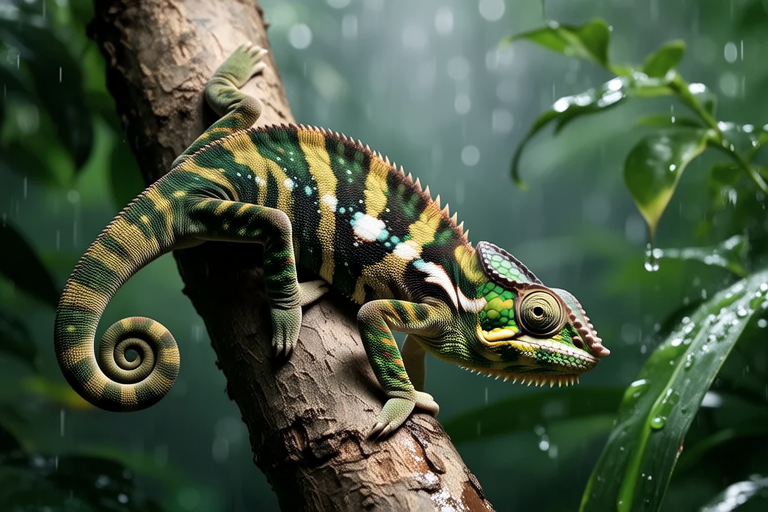
5 Common Myths About Chameleons Debunked
Chameleons, with their unique appearance and intriguing behaviors, have captured the imagination of people for centuries. These fascinating reptiles are often surrounded by myths that can lead to misunderstandings about their biology and care. In this article, we will explore five common myths about chameleons and provide accurate explanations based on scientific facts.
Myth 1: Chameleons Change Color to Match Their Surroundings
The most widely believed myth about chameleons is that they change color to blend into their environment. This misconception has been perpetuated by movies, cartoons, and even some educational materials. While it’s true that chameleons can alter their color, their primary reason for doing so is not camouflage but communication and temperature regulation.
Chameleons have specialized cells called chromatophores beneath their skin that contain different pigments. By expanding or contracting these cells, chameleons can display a wide range of colors. The exact shade they choose depends on their mood, health, and social interactions. For instance, a male chameleon may turn bright colors during courtship displays or darker shades when threatened. Female chameleons also change color to signal their reproductive status.
The idea that chameleons change color to match their surroundings likely originated from observations of their ability to blend in with certain backgrounds. However, this blending is coincidental rather than intentional. Chameleons don’t have the cognitive ability to analyze their environment and adjust their color accordingly. Instead, their color changes are more akin to a reflexive response to internal stimuli.
Tips for owners: Understanding your chameleon’s color-changing behavior can help you gauge its well-being. A healthy chameleon will exhibit vibrant colors, while dull or muted tones might indicate stress or illness. Provide a varied environment with branches and foliage to stimulate natural behaviors without the need for exact camouflage.
Myth 2: Chameleons Can Only Live in Tropical Climates
Another common myth is that chameleons can only survive in tropical climates. This belief stems from the fact that many popular pet chameleons, such as panther chameleons and veiled chameleons, originate from regions with warm, humid weather. However, chameleons actually inhabit a wide variety of environments, from deserts to rainforests.
Chameleons are ectothermic, meaning they rely on external sources of heat to regulate their body temperature. They have evolved various adaptations to thrive in different climates. For example, some species have developed long tails to help them balance on narrow perches, which is useful in arid environments where vegetation is sparse. Others have adapted to cooler temperatures by hibernating during winter months.
The misconception about tropical habitats likely arose because the chameleons commonly sold in pet stores are from warmer areas. However, this doesn’t mean all chameleons require tropical conditions. Proper care involves replicating the specific environmental needs of the species you’re keeping, whether that means providing a humid terrarium or ensuring access to basking spots.
Tips for owners: Research the native habitat of your chameleon species before setting up its enclosure. Mimicking its natural environment as closely as possible will ensure better health and longevity. Consult experienced breeders or veterinarians if you’re unsure about the specific requirements for your chameleon.
Myth 3: Chameleons Use Their Tongues to Hear
One of the more unusual myths about chameleons is that they use their tongues to hear. This misconception probably began because chameleons have highly sensitive tongues capable of catching prey at great distances. However, chameleons’ hearing is quite similar to other lizards, and they do not rely on their tongues for auditory purposes.
Chameleons have small, round ear openings behind their eyes, which are connected to their inner ears. These structures allow them to detect sound waves, although their hearing is not as acute as that of mammals. The myth about using tongues to hear may have arisen from observations of chameleons flicking their tongues rapidly, which they do primarily to catch insects.
Chameleons’ tongues are remarkable for their speed and precision. They can extend up to twice the length of the chameleon’s body in just milliseconds. This adaptation enables them to capture prey with incredible accuracy. Their tongues are lined with sticky saliva that helps ensnare insects.
Tips for owners: Encourage natural behaviors by providing live insects for feeding. Chameleons in captivity often become accustomed to feeding from tweezers, but offering crickets or mealworms in a shallow dish can stimulate tongue-flicking activity. Be cautious with the types and quantities of insects you offer to avoid overfeeding or nutritional imbalances.
Myth 4: Chameleons Are Easy Pets for Beginners
Many novice reptile enthusiasts believe that chameleons make easy pets due to their exotic appearance and perceived low maintenance. This myth can be particularly dangerous because chameleons have very specific care requirements that are challenging to meet. They are not recommended for beginners.
Chameleons require a well-maintained environment with appropriate lighting, humidity, and temperature gradients. They need UVB light to synthesize vitamin D3, which is crucial for calcium absorption. Without proper lighting, chameleons can develop metabolic bone disease. Additionally, they need a varied diet of insects and sometimes plant matter, depending on the species.
The myth about ease of care likely originated from the popularity of chameleons as pets and the availability of care guides online. However, these resources often oversimplify the complexities involved in maintaining a healthy chameleon. It’s important to understand the commitment required before bringing one home.
Tips for owners: If you’re considering a chameleon as a pet, invest time in learning about its specific needs. Join local or online communities of chameleon enthusiasts to gain valuable advice and support. Always consult with a veterinarian who specializes in reptiles to ensure your chameleon receives the best possible care.
Myth 5: Chameleons Can Regrow Lost Limbs
The final myth we’ll address is that chameleons can regrow lost limbs. This belief is related to the phenomenon seen in some amphibians and lizards, like salamanders and geckos, which can regenerate lost appendages. While chameleons do possess the ability to shed their tails as a defense mechanism, they cannot regrow them or any other lost limb.
Chameleons can voluntarily detach their tails when grabbed by a predator. This process, known as autotomy, allows them to escape while the predator is distracted by the wriggling tail. Once detached, the tail does not grow back. Unlike some other lizards, chameleons lack the cellular mechanisms necessary for regeneration.
The myth about regrowing limbs likely comes from the observation of other lizard species that can regenerate lost tails or limbs. While it would be fascinating if chameleons could do the same, their anatomy and physiology simply do not support this ability.
Tips for owners: Handle your chameleon gently to avoid stressing it or causing accidental injuries. If you notice any signs of injury or illness, seek veterinary care immediately. Regular check-ups can help identify potential issues early and prevent complications.
Conclusion
Chameleons are captivating creatures with many unique traits and behaviors. By understanding the truth behind common myths, we can appreciate these animals more fully and provide them with the care they deserve. Whether you’re a seasoned reptile enthusiast or new to the world of chameleons, dispelling these misconceptions will enhance your appreciation of these fascinating reptiles.
