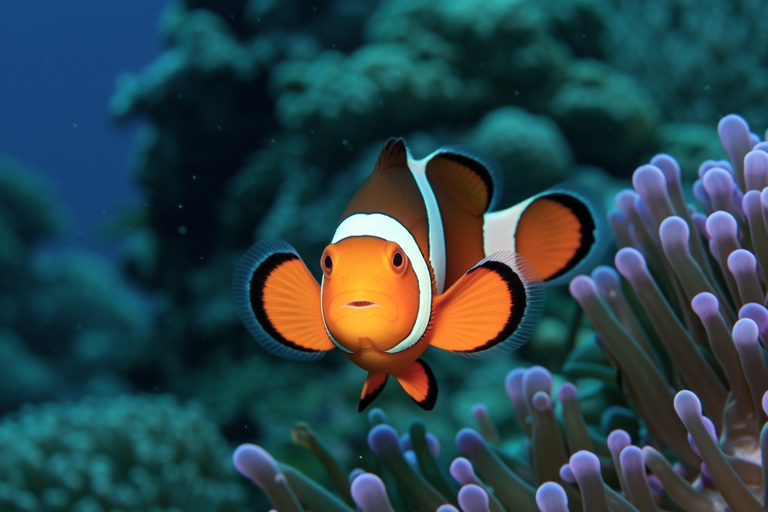
The Hidden World of Clownfish
Imagine diving into the vibrant, bustling world beneath the waves, where a kaleidoscope of colors and movements awaits you. Among this aquatic tapestry, one small, charismatic fish stands out: the clownfish. With their striking patterns and endearing personalities, these creatures have captured the hearts of many, from marine biologists to casual observers. In this journey, we will explore the hidden world of clownfish, delving into their lifecycle, unique behaviors, and symbiotic relationships with sea anemones. We will also examine their role in the marine ecosystem, the conservation challenges they face, and the impact of climate change on their habitat. Along the way, we’ll uncover interesting facts about their vibrant colors, navigation skills, and their portrayal in popular culture.
The Lifecycle of Clownfish
The clownfish lifecycle is a fascinating journey that begins with eggs laid by the male on a flat surface near a host sea anemone. The female selects the site and deposits up to 1,000 eggs. The male then fertilizes them with milt, ensuring genetic diversity within the clutch. Over the next few days, the eggs develop rapidly, hatching into tiny larvae. These larvae drift in the open ocean for several weeks, feeding on plankton and avoiding predators. Once they reach a suitable size and age, they return to coral reefs, seeking out sea anemones to call home. This process, known as reef recruitment, is crucial for the survival of clownfish populations.
Unique Behaviors and Symbiotic Relationships
Clownfish exhibit a range of unique behaviors that contribute to their success in the marine environment. One of the most remarkable aspects of their lives is their symbiotic relationship with sea anemones. These cnidarians provide protection for clownfish by offering shelter among their venomous tentacles, which deter potential predators. In return, clownfish offer food to their hosts by attracting prey with their vibrant colors and active movements. They also clean the anemones by removing parasites and dead tentacles, maintaining the health of both organisms. This mutually beneficial partnership has been studied extensively and serves as a prime example of symbiosis in nature.
The Role of Clownfish in the Marine Ecosystem
Clownfish play a vital role in the marine ecosystem, contributing to the health and balance of coral reefs. As herbivores, they help control the growth of algae on corals, preventing it from smothering and suffocating these delicate structures. Additionally, their presence attracts larger fish and other marine animals, creating a thriving community within the reef. This biodiversity supports the overall resilience of the ecosystem, making it more capable of adapting to changing environmental conditions.
Conservation Challenges and Climate Change
Despite their importance, clownfish face numerous threats to their survival. Habitat destruction, pollution, and overfishing are some of the main challenges they encounter. However, the most significant threat comes from climate change, which is causing widespread damage to coral reefs. Rising sea temperatures lead to coral bleaching, a phenomenon where corals expel the algae living in their tissues, turning white and often dying. Without healthy coral reefs, clownfish lose their homes and sources of food, putting their populations at risk. Efforts to protect clownfish and their habitats are crucial to ensure their continued existence.
Vibrant Colors and Navigation Skills
One of the most striking features of clownfish is their vibrant colors, which vary depending on species but typically include shades of orange, yellow, and black. These colors serve multiple purposes, including camouflage, communication, and warning signals. For instance, the dark stripes on some species may help them blend in with their anemone hosts, while bright hues can signal aggression or readiness to mate. Clownfish also possess exceptional navigation skills, utilizing ocean currents and sound to find their way across vast distances. Their ability to navigate effectively ensures successful reef recruitment and the continuation of their species.
Portrayal in Popular Culture
Clownfish have become iconic figures in popular culture, thanks in large part to their starring role in the animated film “Finding Nemo.” This heartwarming tale follows the adventures of Marlin, a clownfish father searching for his son Nemo after he is captured by divers. While the movie takes some creative liberties with the biology of clownfish, it has undoubtedly raised awareness about the importance of protecting marine life and their habitats. Other media representations, such as documentaries and video games, have further contributed to the public’s fascination with these charming fish.
Conclusion
The hidden world of clownfish is a testament to the beauty and complexity of marine ecosystems. From their intricate lifecycles to their symbiotic relationships with sea anemones, these creatures offer endless opportunities for exploration and discovery. By understanding the challenges they face and the roles they play in the underwater world, we can work together to protect clownfish and the vibrant environments they call home. Let us continue to learn from and appreciate these remarkable fish, ensuring their place in our oceans for generations to come.
