DIY & Repairs
How to Fix a Leaky Faucet In Under Ten Minutes
Stop the Drip, Save the Water and Money
**Introduction**
Few things are as annoying in a quiet home as the persistent, rhythmic drip of a leaking faucet. Beyond the maddening noise that disturbs your sleep, a leaky faucet is a silent thief draining your wallet through unnecessary water waste and increasing utility bills. Most homeowners assume that fixing plumbing issues requires hiring a professional plumber, often waiting weeks for appointments and paying hefty service fees. However, the truth is that minor plumbing repairs, such as replacing a worn-out washer or O-ring, can often be accomplished by anyone with the right tools and a clear guide.
In this comprehensive guide, we will walk you through the entire process of how to fix a leaky faucet in under ten minutes. By following structured steps, you can reclaim your peace of mind and enjoy a fully functional sink. Whether you are dealing with a kitchen basin mixer or a bathroom vanity fixture, the principles of repair remain largely consistent. Our goal is to provide practical, actionable advice that empowers you to handle these repairs confidently.
Most repair stores sell starter kits. Alternatively, a universal faucet repair kit often includes the essential washers and basic adapters compatible with common models. Is glue ever needed?
No. Faucets operate under pressure; adhesives rarely hold and can dissolve in water. Mechanical fastening and proper sealing with gaskets are always preferred. Can I leave the water on?
Never attempt to replace parts while the main water supply is active. The resulting spray can flood your floor and damage cabinetry. By following these steps, you ensure a durable, effective repair that lasts for years, confirming that professional-grade results are accessible to every homeowner.
1. Essential Tools and Preparation
Before attempting any repair, proper preparation is key to efficiency and avoiding further damage. Rushing into a project without gathering the necessary equipment often leads to stripped screws or scratched finishes. Here is a detailed breakdown of what you need to have ready before turning that wrench.Gathering Your Hardware and Equipment
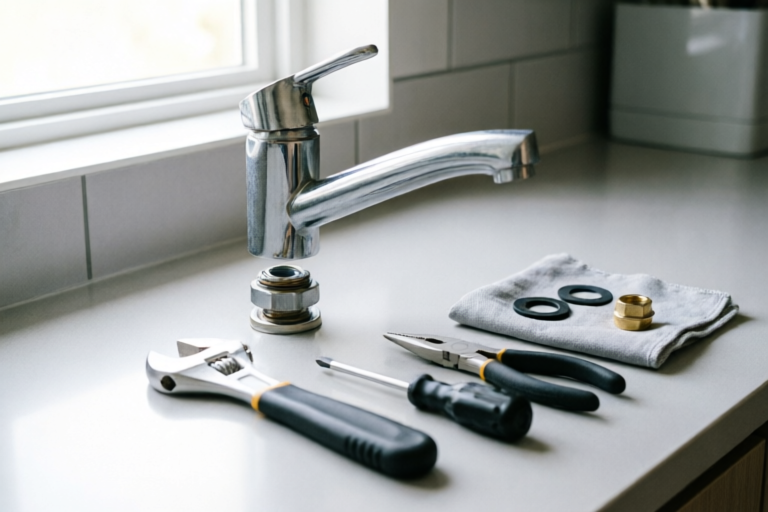
The foundation of a successful repair lies in having the correct tools at hand. You generally need an adjustable wrench (also known as a Crescent wrench). This versatile tool allows you to tighten or loosen nuts of varying sizes without needing a specific socket set. Additionally, gather a set of screwdrivers, including both flathead and Phillips head options. Faucet handles often use either type of screw, and some may require a specialized Allen key (hex wrench) if there is a small hole beneath a decorative cap. Crucially, you must prepare for potential leakage during disassembly by having rags or towels and a bowl or bucket. Even after turning off the water supply, residual water will likely remain in the pipes. Finally, identify your replacement parts. While the outline mentions general washers, knowing whether your faucet uses a rubber washer, a ceramic disk, or a plastic cartridge ensures you buy the correct part. Visit your local hardware store with the old part in hand if possible, or note down the model number of your faucet to ensure a perfect match.Protecting Your Fixtures
A common oversight in DIY repairs is damaging the aesthetic appeal of the sink while performing mechanical work. Chrome finishes are soft and easily scratched by metal tools. Before inserting your wrench, place a cloth over the faucet body and the nut you intend to turn. This simple step prevents scratches and dents. Furthermore, remove any jewelry and tie back long hair to avoid accidental drops into the drain, which could clog it with lost parts.2. Shutting Off the Water Supply
Safety and prevention of water damage come first. Working on a pressurized plumbing system is dangerous and messy. You must eliminate the water pressure before unscrewing any component.Locating and Closing the Shut-Off Valves
Most modern sinks are equipped with individual shut-off valves located on the water supply lines beneath the sink basin. These are typically small handles—either round knobs or lever-style—that connect to copper or flexible tubing running along the wall or cabinet walls. To stop the water flow, turn these valves clockwise until they stop completely. Do not force them; if they are stiff, gently apply more leverage, but be cautious not to break the pipe. If you cannot find separate valves or if they are seized, you may need to shut off the main water supply to your house. Locate the main shut-off valve, usually found in the basement, garage, or near the water meter outside. Turning this valve clockwise stops water to the entire property. Always inform household members that plumbing work is in progress to prevent someone from accidentally turning the water back on mid-repair.Draining Remaining Pressure
Once the valves are closed, the water still inside the faucet line has nowhere to go. Open the faucet handle briefly. If you hear a glug or see a stream of water coming out, wait until the flow stops completely. This action relieves the remaining pressure in the line, preventing a gush of water when the faucet assembly is finally disconnected.3. Disassembling the Faucet Components
With the water off and tools ready, the next phase involves taking the faucet apart. Different faucet designs require different disassembly methods. Knowing your faucet type—whether it is a compression, cartridge, ball, or disk—will streamline this process.Removing the Handle Cap and Bolts
Start by inspecting the handle for a decorative cap. Look for the hot/cold indicators (blue/red) or a manufacturer logo. Often, the screw holding the handle is hidden under this cap. You can pry the cap open gently using a small flathead screwdriver or a utility knife. Be careful not to gouge the surface. Once the cap is removed, use the appropriate screwdriver to loosen the mounting screw. Lift the handle straight up. If it is stuck, wiggle it gently side to side to break the corrosion seal, but avoid excessive force that might snap the brass connector.Exposing the Valve Stem or Cartridge
Underneath the handle, you will find the stem or the cartridge assembly held by a retaining clip, nut, or bracket. Use your needle-nose pliers to remove a C-clip if present. For compression faucets, you will see a packing nut securing the stem. Use your adjustable wrench to turn this nut counter-clockwise to release the stem. Carefully pull the stem out of the faucet body. In cartridge-style faucets, you may need a puller tool, though often pulling it out by hand works once the retaining clip is removed. Keep all screws and clips organized on a magnetic tray or in a labeled bag so nothing gets lost.4. Replacing the Faulty Internal Parts
This is the core of the repair. The root cause of most leaks is a degraded internal seal. Identifying exactly which part is failing saves time on trial and error.Identifying the Damaged Component
Inspect the parts you have removed. Look for mineral deposits (white crusty buildup) indicating hard water damage. Rubber washers become brittle, cracked, or warped over time. Metal seats may have pitting where the washer strikes. If you see visible wear, deformation, or cracks, this is the culprit. O-rings are smaller rings that fit around the shaft of stems; they also degrade with age. If you are unsure which part is damaged, replacing the entire washer kit is safer and cheaper than guessing.Selecting the Correct Replacement Part
>Purchasing the right part is crucial. If you brought the old part to the store, confirm visually that the dimensions match exactly. Washers come in various diameters and thicknesses. Using a washer that is too large will prevent the valve from closing properly, leading to a continued leak. Conversely, one that is too small will allow water to bypass the seal immediately. Insert the new rubber washer onto the stem, ensuring it sits flush against the bottom. Apply a thin layer of waterproof plumber’s grease to the O-rings and threads of the stem to ensure smooth operation and future longevity. Grease prevents the rubber from seizing to the metal casing.Installing the New Assembly
Carefully re-insert the stem or cartridge back into the faucet body. Ensure it goes in straight without twisting, as misalignment can strip the threading or crack ceramic components. Push it down firmly until it seats correctly. Replace the retaining clip or tighten the packing nut securely. Remember that this nut should be tightened enough to prevent movement, but overtightening can crush the washer or bend the stem. Aim for a snug fit rather than torque-intensive tightening.5. Reassembly and Leak Testing
Now that the internal mechanics are repaired, you must reverse the disassembly process meticulously. The temptation to rush the last step is high, but precision here determines whether your repair holds.Securely Reattaching All Components
Replace the handle over the stem or cartridge. Align it correctly (handle pointing towards the open position) before tightening the screw. Replace the decorative cap and snap it into place. Reconnect the water supply lines if they were detached. Double-check that all tools and rags have been removed from the cabinet to avoid clutter or blockages.Turning the Water Back On
>Carefully turn the shut-off valves counter-clockwise to restore water flow. Listen for any hissing sounds or immediate splashing which would indicate a loose connection. Turn the faucet handle to the open position slowly at first. Observe the base of the spout and the areas where you made connections. If there is a steady stream of water or pooling beneath the sink, turn the supply off immediately, dry the area, and tighten the fittings slightly.Verifying the Leak is Resolved
Run the tap for at least a minute. Watch the drips stop completely. Sometimes, air pockets trapped in the line can cause spluttering initially; run it until the flow stabilizes. Check the temperature settings (hot and cold) as leaks sometimes only occur with one side. If the drip persists after tightening, revisit the disassembly to check if the new part was installed backwards or if the seat inside the faucet body requires grinding or replacement (often called a seat dressing).Conclusion and Maintenance Tips
Fixing a leaky faucet is a manageable task that rewards patience and attention to detail. By mastering this skill, you reduce dependency on external services and contribute to water conservation efforts. To prevent future issues, schedule an annual inspection of your plumbing fixtures. Clean the aerators on your spouts every few months to prevent sediment buildup which can disrupt seals. If your water is extremely hard, consider installing a whole-house filter or using water softeners to extend the life of your internal washers. With this guide, you now possess the knowledge to tackle the problem efficiently, keeping your home watertight and your wallet safe.Frequently Asked Questions
What if I don’t have the tools?Most repair stores sell starter kits. Alternatively, a universal faucet repair kit often includes the essential washers and basic adapters compatible with common models. Is glue ever needed?
No. Faucets operate under pressure; adhesives rarely hold and can dissolve in water. Mechanical fastening and proper sealing with gaskets are always preferred. Can I leave the water on?
Never attempt to replace parts while the main water supply is active. The resulting spray can flood your floor and damage cabinetry. By following these steps, you ensure a durable, effective repair that lasts for years, confirming that professional-grade results are accessible to every homeowner.
Comments

NoviceFixer
Super helpful guide! Just wish the pics were a bit clearer on the handle removal part.
👍 26👎 0

BudgetRanger
Saved so much money not calling a pro. Step 4 was tricky identifying the exact washer though.
👍 10👎 0

HandyHank
Pro tip from experience: definitely put a towel down in the basin. Dropped a screw once trying to fix a leak.
👍 11👎 0
KitchenQueen
Quick question - what if I don't see shut-off valves under the sink? Had to turn off main line 😅
👍 9👎 0

DIY_Dave_99
Finally fixed that annoying drip! Took me like 12 minutes but worked like a charm.
👍 17👎 0