Home & Living
How to Deep Clean Carpets Effectively Without Expensive Professional Equipment Today
Restore Your Floors, Restore Your Savings
# How to Deep Clean Carpets Effectively Without Expensive Professional Equipment Today
Maintaining the beauty and hygiene of your home often comes down to the floor coverings you walk on daily. Carpets offer warmth and comfort, but they trap dust, allergens, and spills just below the surface. While professional steam cleaning services promise pristine results, the cost can be prohibitive for many homeowners. The good news is that you do not need to spend hundreds of dollars on machine rentals or service fees to achieve professional-grade cleanliness.
By understanding the fundamentals of textile care and utilizing the right manual methods, you can rejuvenate your carpets at a fraction of the cost. This comprehensive guide will walk you through everything you need to know to deep clean your carpets effectively without expensive professional equipment today. From identifying fiber types to tackling stubborn pet stains, we will cover the entire process to help you maintain a healthier living environment while keeping your wallet intact.
## 1. Understanding Carpet Types and Preparation Needs
Before applying any water or cleaning agents, the most critical step is knowing what you are working with. Carpets are not created equal; they vary significantly in composition, construction, and sensitivity to moisture and chemicals. Applying the wrong cleaning method to the wrong fiber can lead to discoloration, shrinkage, or permanent damage.
### Identifying the Specific Fiber Material
Most modern carpets fall into two broad categories: synthetic fibers and natural fibers.
**Synthetic Fibers:** These include Nylon, Polyester, Olefin (Polypropylene), and Acrylic. They are generally durable, colorfast, and relatively easy to clean. Nylon is known for its resilience and resistance to crushing. Polyester is soft and stain-resistant, making it a popular choice for living areas. Olefin is excellent for damp environments like basements because it resists mold and moisture. When cleaning synthetics, you can generally tolerate slightly stronger cleaning solutions and more aggressive agitation.
**Natural Fibers:** Wool, Cotton, Silk, and Jute are considered luxury materials. Wool is particularly sensitive to alkaline substances (like strong soaps) and excessive moisture, which can cause shrinking or felting. Cotton and silk are delicate and require gentler handling. Jute is highly susceptible to water damage. For these materials, it is crucial to test any cleaning solution on an inconspicuous area first. Limit water usage and dry quickly to prevent mold growth or structural damage.
Always check the manufacturer’s label if available. If it is not, consult a flooring specialist or perform a burn test on a hidden sample thread to identify the fiber composition accurately.
### The Importance of Thorough Pre-Vacuuming
Many people skip this step, leading to muddy results. You cannot deep clean a dirty carpet; you can only clean what remains after the loose dirt is removed. Surface dust, sand, and debris act like sandpaper under pressure. When you agitate the carpet with water, these particles grind deeper into the fibers.
**The Two-Pass Technique:**
Perform a thorough vacuuming session before adding any liquid. Pass the vacuum head vertically over the carpet, covering the area once. Then, rotate 90 degrees and pass horizontally. This ensures you catch dirt trapped in all grain directions. Pay special attention to high-traffic areas and corners near baseboards. Remove furniture beforehand if possible to access hidden grime.
If you own pets, vacuuming alone may not suffice. Hair and dander embed deeply. Consider using a rubber broom or a dedicated grooming tool to lift embedded hair before vacuuming. This preparation stage ensures that your subsequent water-based cleaning targets the actual stains and bacteria, not loose dust.
## 2. Gathering Budget-Friendly Cleaning Tools
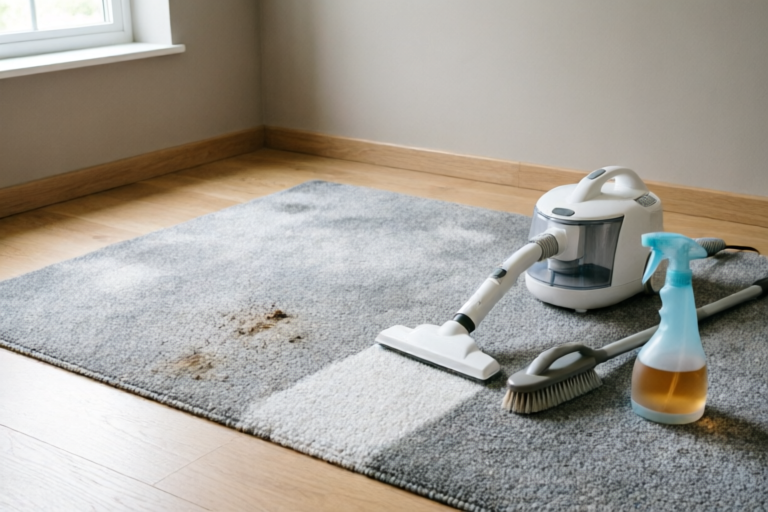
You do not need a $500 rental extraction machine or industrial steam cleaner to achieve deep cleaning results. Many households already possess the tools required for effective manual carpet cleaning. By compiling essential items, you can assemble a "cleaning kit" that rivals commercial equipment in efficacy but costs a fraction of the price.
### Essential Household Items
1. **Spray Bottles:** These allow for controlled application of your cleaning solution directly onto the carpet. A pump-style sprayer is preferable to pressurized aerosols to avoid oversaturation. Look for bottles with adjustable nozzles to switch between mist and stream.
2. **Stiff Bristle Brushes:** A hard-bristled deck brush or a sturdy upholstery brush is vital for agitation. Soft sponges are insufficient for deep fibers. The stiffness helps work the cleaning solution deep into the carpet pile without damaging the backing, breaking up the bond between dirt and fiber.
3. **Microfiber Towels:** White microfiber cloths are excellent for blotting and wiping. Avoid colored rags that might transfer dye onto the carpet. Microfiber traps dirt electrostatically better than cotton rags. Have plenty on hand, as you will need fresh ones frequently.
4. **A Bucket:** A medium-sized bucket is necessary for mixing your cleaning solutions. It allows you to control concentration levels easily. Ensure it is large enough to dip a mop or brush, but not so heavy that it becomes unwieldy.
5. **Wet/Dry Vacuum (Shop Vac):** If you have a shop vac with a water-extraction attachment, this is the closest substitute to a rented rental machine. If not, manual soaking and blotting is still viable but requires more effort and drying time.
6. **Fan and Dehumidifier:** These are non-negotiable for the drying phase. Speed is essential to prevent microbial growth.
### DIY Cleaning Solutions
Professional detergents are loaded with surfactants and fragrances that leave sticky residues over time. You can formulate effective solutions using pantry staples.
**General Purpose Cleaner:**
Mix warm water with a small amount of liquid dish soap (like Dawn). Dish soap is designed to cut grease and food oils. Use a ratio of roughly one teaspoon of soap per gallon of water. Too much soap leaves a residue that attracts dirt later.
**Acid Rinse (To Neutralize Soap):**
After scrubbing with soap, rinse with a mixture of one part white distilled vinegar to four parts water. The acidity neutralizes the alkaline soap, preventing rapid re-soiling. It also kills many odor-causing bacteria.
**Abrasive Paste for Tough Grime:**
For heavily matted areas, a paste of baking soda and water can act as a mild abrasive to scrub away embedded dirt. Sprinkle, let sit, and vacuum.
## 3. Step-by-Step Manual Deep Cleaning Process
Now that you have identified your carpet type and gathered your tools, it is time to execute the deep clean. Manual cleaning relies on technique rather than brute force power. Precision and timing are key to removing dirt without spreading it.
### Step 1: The Spot Test
Never apply a solution to the whole room without testing. Choose a corner near a closet or under a chair leg. Apply a small amount of your cleaning solution. Blot and wait until it dries. Check for colorfastness (does the dye bleed?) and texture change (does the carpet feel stiff?). If everything looks good, proceed to the full treatment.
### Step 2: Applying the Cleaning Solution
Work in small sections, approximately 3x3 feet square. Do not flood the carpet. Excessive moisture leads to mold in the pad beneath. Fill your spray bottle with your dish soap solution. Lightly mist the carpet section. You want the fibers damp, not soaked. If the carpet is very dirty, you may need two applications.
### Step 3: Manually Agitating the Fibers
This is the mechanical equivalent of the spinning wand on a steam cleaner. Take your stiff bristle brush and scrub the dampened section. Work in a circular motion to penetrate deep, then finish with a gentle push forward along the direction of the grain. Agitate for about two minutes per square foot.
Focus on the creases where the fibers bend; this is where dirt accumulates most densely. The friction breaks the bond holding the soil to the fiber. If you have a carpet rake (like those used for lawn bowls or specialized carpet tools), use it here to stand the fibers up and expose the roots.
### Step 4: Rinsing (Crucial Step)
Dirty soap solution left in the carpet is worse than no cleaning at all because it sticks like glue, attracting more dust. This is the step most DIYers forget. After scrubbing, take a bucket of clean water mixed with the vinegar rinse solution. Spray or damp-mop this over the area. This flushes out the dissolved dirt and the soap residue. Blot immediately with a dry towel.
### Step 5: Extracting Excess Moisture
If you have a Wet/Dry Shop Vac, use the hose attachment to suck up the water. If not, use a stack of thick, absorbent dry towels. Lay the towel flat over the wet area and press down firmly with your hands or step on it. Walk on it repeatedly to wick the moisture out. Replace the top layer of towels once saturated. Repeat until the towels remain dry upon contact.
### Step 6: Fluffing the Pile
Once the carpet is mostly dry to the touch, run a stiff brush gently across the pile to separate the fibers. This prevents the carpet from matting down as it finishes drying and restores the velvet-like appearance.
## 4. Targeted Strategies for Common Stubborn Stains
Even with a general deep clean, certain messes will resist standard washing. Different soils require specific chemical reactions to break down successfully. Applying generic soap to grease or wine is ineffective. Here are targeted protocols for the most difficult messes.
### Pet Accidents and Odors
Pet urine is particularly challenging because enzymes lock into the protein structure of the carpet fibers and padding. Once dried, the scent molecules become active again in humidity.
**The Enzymatic Approach:**
While commercial enzymatic cleaners are effective, you can mimic this effect. Mix water and a 50/50 solution of apple cider vinegar and water. Soak the stain. Sprinkle generous amounts of baking soda over the damp area. Let it sit until completely dry. The chemical reaction fizzing helps lift the stain, and the baking soda absorbs the odor.
However, for severe cases, you must ensure you reached the padding. If the smell persists, you may need to extract the carpet locally or use a hydrogen peroxide mix (1 part peroxide to 1 part water) for whitening, but test thoroughly as peroxide can bleach wool or dyed carpets.
### Red Wine Spills
Time is the enemy here. Fresh red wine can be blotted up, but set-in stains oxidize.
**Blotting Method:**
Do not rub! Rubbing spreads the pigment. Blot from the outside in to avoid ring formation.
**The Salt Trick:**
Immediately after spilling, pour salt over the wet wine. It absorbs moisture rapidly. Let it sit until it forms a crust, then vacuum. Follow up with club soda. The carbonation helps lift the tannins from the fabric. Blot with a clean cloth and vinegar solution afterward.
### Grease and Oil Marks
Soap cuts grease, but oil stains on carpet need solvents before water.
**Grease Cutting Protocol:**
Absorb any excess grease with paper towels. Apply a dollop of liquid dish soap directly to the spot (undiluted). Work it into the carpet with a toothbrush or stiff brush. Let it sit for 10 minutes to emulsify the oil. Then, blot with a hot, damp cloth. The heat helps liquefy the oil for extraction. Rinse with cool water to prevent re-depositing the grease.
### Mud and Dirt
Let mud dry completely before attempting to remove it. If it is wet, it turns into sludge and penetrates deeper.
**Dry Scraping:**
Once fully dry, scrape the surface grit with a dull knife or spoon. Vacuum vigorously to remove the dry dust. If a shadow remains, use the vinegar-soaked towel method described in the general cleaning process to draw the remaining minerals out.
### Ink Stains
Alcohol is a solvent for ink.
**Rubbing Alcohol:**
Apply a small amount of isopropyl alcohol to a white cloth. Dab at the stain, moving inward toward the center. Flip the cloth constantly to transfer ink to fresh fabric. Avoid soaking the carpet as alcohol can sometimes affect adhesives or latex backing.
## 5. Drying Techniques and Long-Term Maintenance Tips
Cleaning is only half the battle; drying determines the longevity of your next clean. Improper drying can lead to secondary damage, including black mold growth, foul odors, and carpet rot. Furthermore, maintenance is the secret to extending the interval between deep cleans.
### Methods to Speed Up Drying Time
Water takes time to evaporate, especially from the dense weave of modern carpets. To speed this up:
1. **Cross-Ventilation:** Open windows on opposite sides of the room to create a draft. This moves moist air out faster.
2. **Air Circulation:** Place electric fans facing directly at the damp carpet. Position one fan to blow across the surface and another to pull air upward from the ceiling. Do not point heaters directly at the carpet unless they are radiant, as direct heat can scorch fibers or shrink wool.
3. **Dehumidification:** If you live in a humid climate or winter months, use a portable dehumidifier in the room. This pulls moisture from the air and draws it out of the carpet.
4. **Elevate Furniture:** Never put furniture back onto wet carpet. The weight traps moisture underneath, leading to rot. Leave legs raised on aluminum foil or temporary pads until absolutely dry. If the carpet feels cold, it is likely still damp inside.
5. **Avoid Foot Traffic:** Close off the room entirely while drying. Every footprint adds new dirt to wet fibers.
### Advice on Maintaining Cleanliness
Deep cleaning removes years of grime, but daily habits dictate how fast it gets dirty again.
**High-Traffic Zones:**
Place washable runners in hallways and entryways. A good rule of thumb is to place a rug where shoes typically land. Wash runners weekly.
**Immediate Spot Cleaning:**
Address spills within 30 minutes. The longer a liquid sits, the more it bonds chemically with the fiber. Keep stain remover wipes or a small spray bottle in your utility cart or hallway.
**Vacuum Schedule:**
Vacuum high-traffic areas three times a week and low-traffic areas once a week. Vacuum slowly; pulling the vacuum head too fast creates suction turbulence that blows dirt back into the air instead of trapping it in the bag or bin.
**Furniture Rotation:**
Carpets fade unevenly due to sunlight and wear. Move furniture every six months to ensure even distribution of foot traffic and sun exposure. This preserves the aesthetic value of the carpet.
**Annual Check:**
Every year, lift the edges of rugs and inspect the carpet underneath for signs of pests or mold. Rotate cushions on sofas to reduce wear on one side.
## Conclusion
Deep cleaning your carpets is an attainable goal that does not require a significant financial investment or renting specialized machinery. By respecting the material limitations of your carpet, assembling a toolkit of everyday household items, and meticulously following a process focused on agitation and rinsing, you can achieve remarkable results. Focus particularly on targeted stain treatments to handle the messiest situations and prioritize proper drying to protect your indoor air quality.
With these strategies, you transform carpet maintenance from a recurring expense into a manageable, rewarding skill. You gain knowledge of your home’s infrastructure and enjoy the satisfaction of a revitalized living space. Start with the easiest room today, practice the techniques, and gradually work towards a fully refreshed home environment. Your carpets will thank you, and your bank account will stay healthy.
Comments

BudgetBoss
quick tip: use old bath towels instead of microfiber for pressing out water
👍 23👎 0

FirstTimer22
super simple breakdown. going to tackle the stairs next since i skipped them
👍 12👎 0

WoolWarning
glad you mentioned checking the fiber tag first. saved my expensive wool rug
👍 7👎 0

CatLadyJess
for pee stains the baking soda soak before shampooing changed everything
👍 19👎 0

DampRat
worked great but took all night to dry. definitely need the fans running
👍 24👎 0

BrushMaster99
don't underestimate the stiff bristle brush. agitated the worst spots easily.
👍 25👎 0
VinegarSkeptic
is it safe to use on dyed rugs tho? gonna test a hidden corner first
👍 2👎 0

ThriftyHomemaker
Saved a fortune on pro services, honestly. Spot came right out using the dish soap method.
👍 4👎 0